

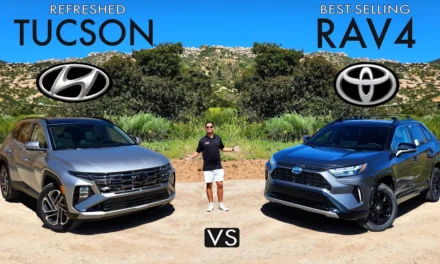
The compact crossover segment is a very crowded space in the US market, with options like the Toyota RAV4 long leading the pack in sales. But, with lots of competitive offerings out there, this all-new RAV4 has quite the task to keep itself ahead. Especially with compelling and rising options like the 2026 Hyundai Tucson! This recently refreshed Tucson is offering lots of luxury and space for the price, but who should be your pick in a 2026 Toyota RAV4 vs. 2026 Hyundai Tucson comparison? Well, let’s dive in and find out!




Exterior Design
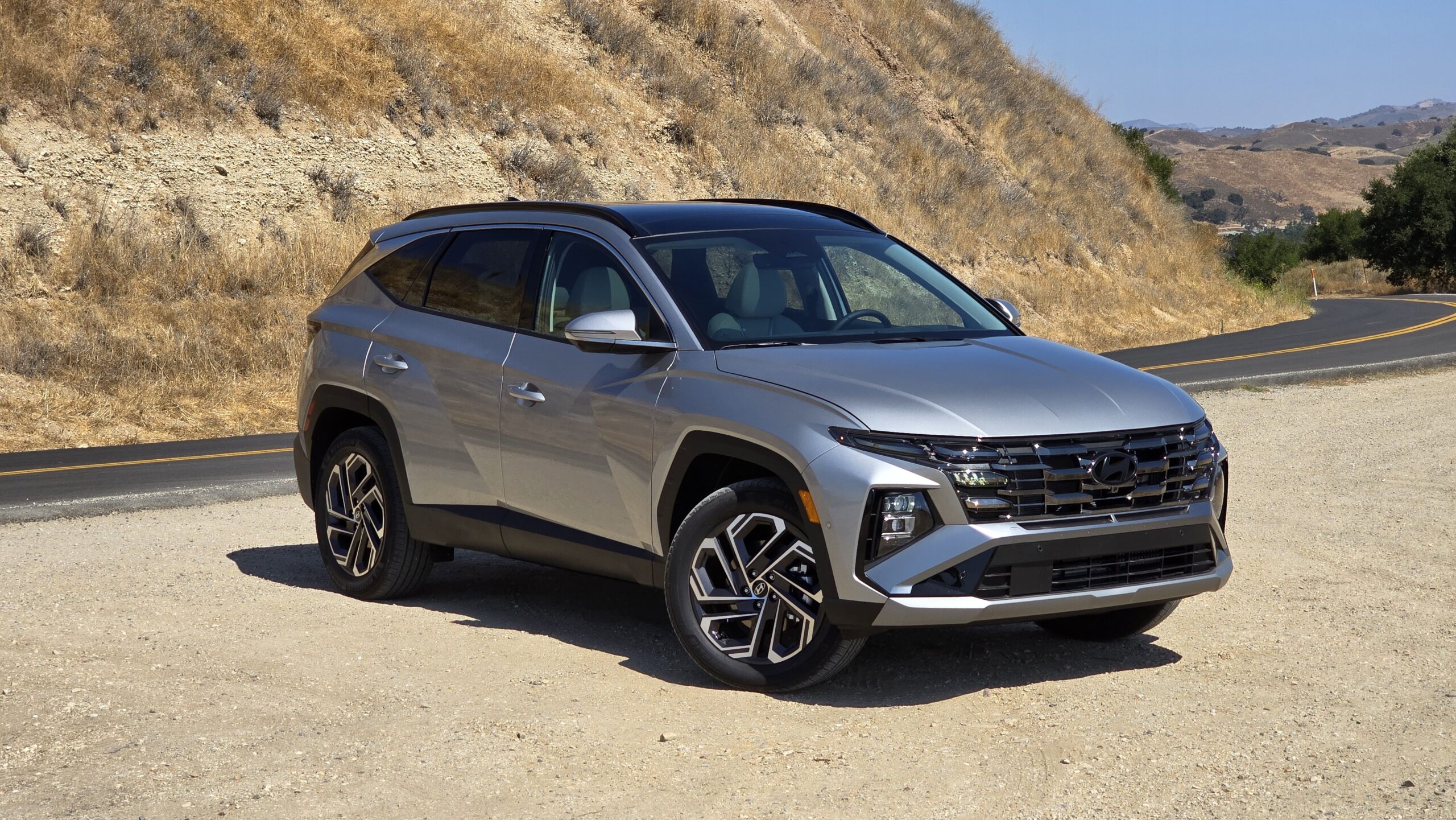
Jumping right into the exterior section, both models have been either refreshed recently or completely redesigned, in the case of the RAV4. While the Limited RAV4 assumes a more conservative guise, with boxy lines, a body-colored grille, and some silver accenting, the Tucson aims to be much more eye-catching. It has strong, angular lines, a large grille with smoked branding, and extended use of silver trim on the top Limited.
What we do score are the various features and differences, starting with the headlights. While the Tucson remains bold in this area, both are rocking projector LED headlamps, with all-LED elements in the housing. Only the RAV4 has fog lamps, however.
The RAV4 also has a 1-inch advantage for wheel size, where it is rocking new 20-inch alloys instead of 19’s as the top size on the Tucson. Rest assured, we will be discussing ride quality later for those concerned.
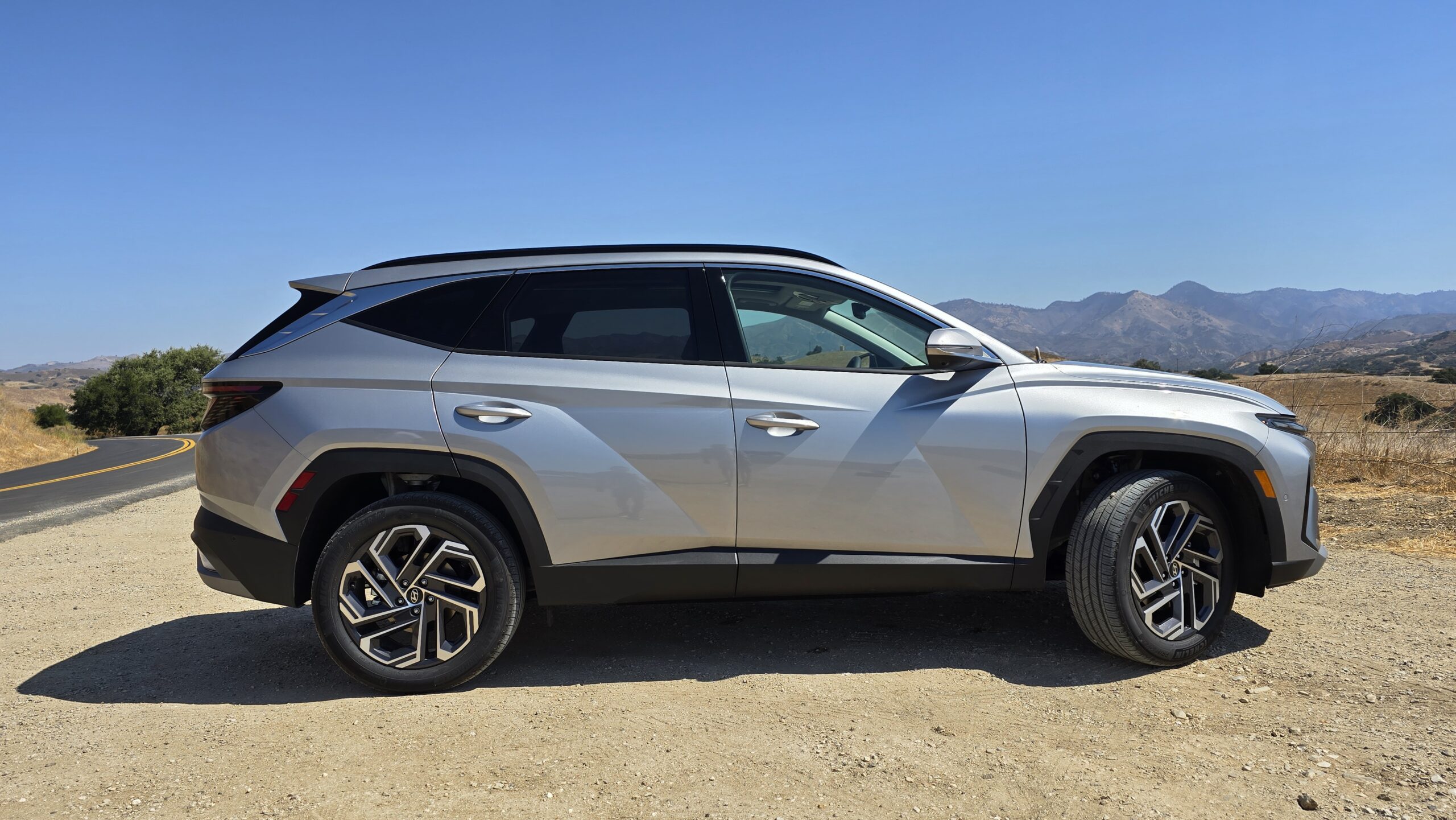
At the side, the Tucson outstretches the RAV4 in terms of length, as the redesign did not give the Toyota a growth spurt for 2026. But interior space really falls to the packaging of each, which we will see later.
Length: 182.7-inches (Tucson) | 181.0-inches (RAV4)
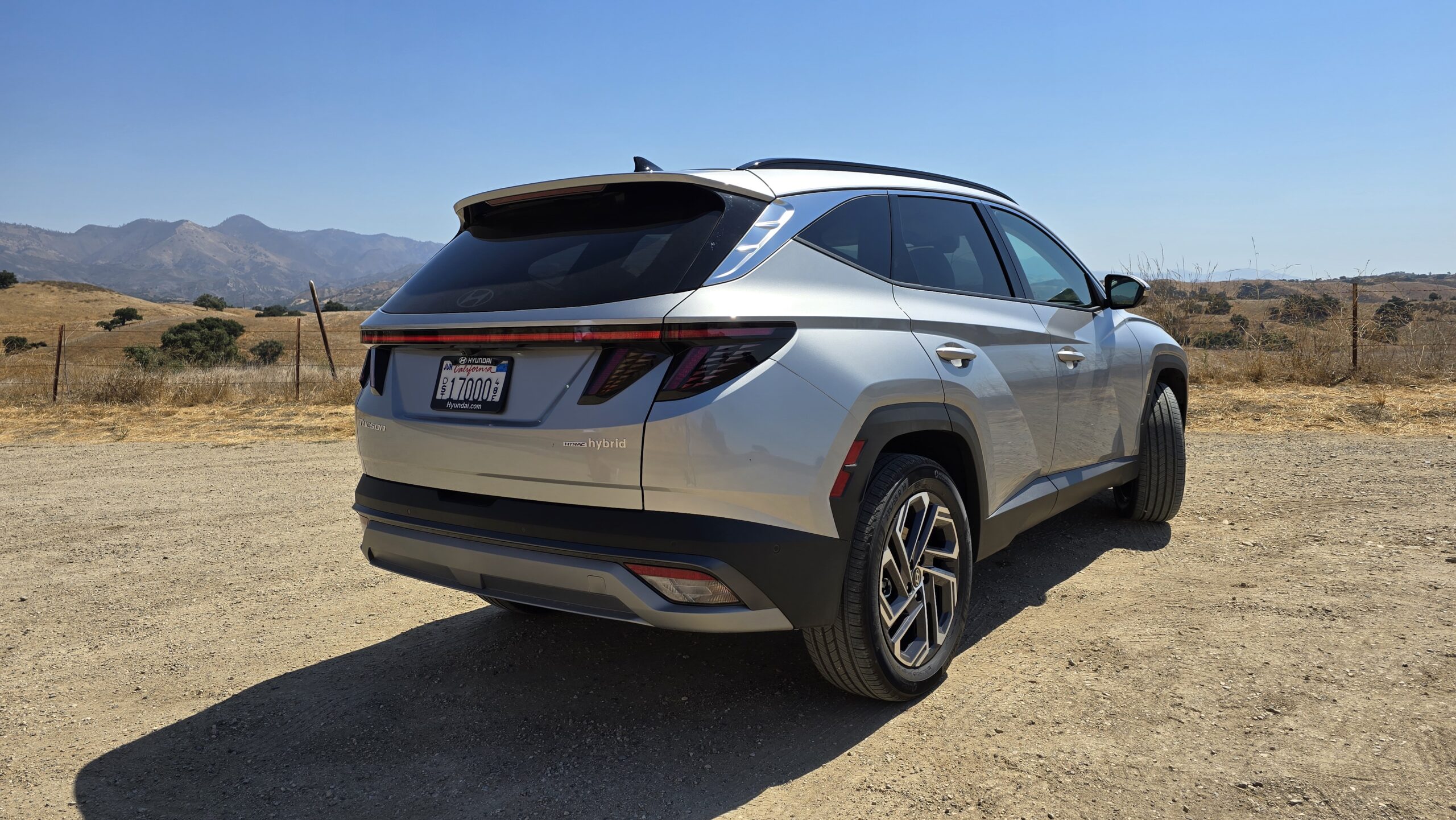
Out back, another place they differ is the taillight situation, where the RAV4 has all elements LED, compared to only one of three on the Tucson.
While both conceal their exhaust tips, only the Tucson conceals its rear wiper, to protect it from weathering. However, this new RAV4, as equipped, can out-tow the Tucson, with up to 3,500 lbs, greater than the 2,000 for the Hyundai.
Headed on to the mirrors, each of them features heating and blind-spot monitoring. But there are some safety features to distinguish. While both feature all 4 of your active safety systems as standard, the RAV4 has a new trick up its sleeve. It has a standard Drive Recorder, which uses the existing cameras on the car to act like a dash cam, to help in case of an accident.
That concludes the exteriors, so let’s hop inside and see how much luxury each brings to the table.
Interior Design
Starting with the keys, both feature smart entry systems and support for remote start, but only the Tucson offers its unique smart park system, to help pull in and out of tight spaces remotely.
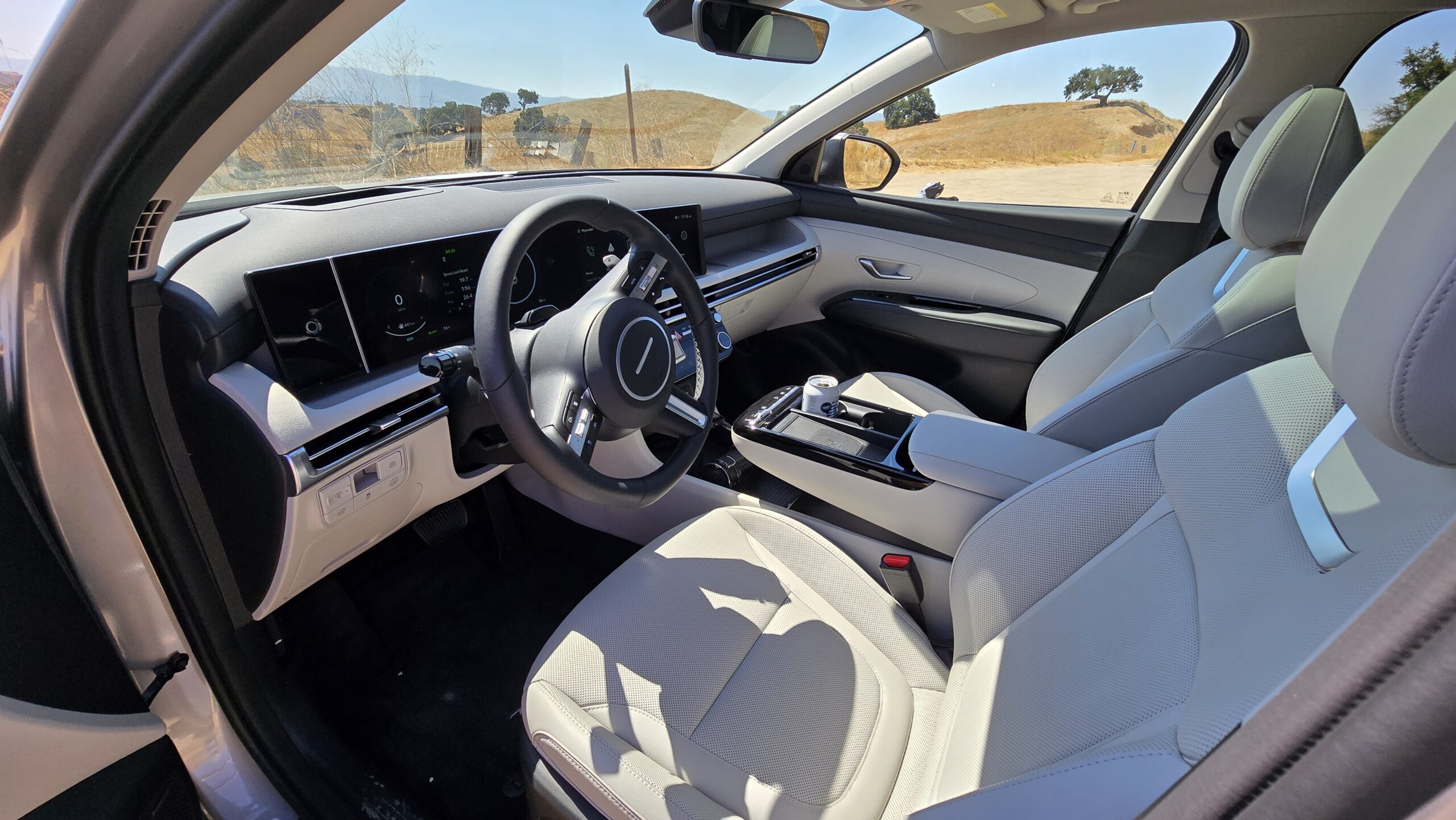
Looking inside, there are many differences between the two, especially when it comes to design. Starting with the seats, the Tucson has a beige seat finished in real leather, while even the top RAV4 uses a faux leather that Toyota calls SofTex. However, features are identical on each, with 10-ways of adjustment, memory, heating, and ventilation.
Once seated, the differences continue as we get into the broad category of material quality, which we divide into solidity and material selections. In both sections, the Tucson carries a notable advantage. Its cabin feels a lot more solid, displaying fewer creaks and gaps overall.
Additionally, it adopts generous use of leather and soft-touch materials throughout, as compared to the RAV4’s mostly hard-touch plastics.
Firing these two up, you’ll now find digital gauge clusters on both, at an equivalent 12.3-inch size. While you can opt for a Head-up Display on the RAV4 Limited, only the Tucson Limited includes one as standard equipment. It also includes the rare feature of a blind spot view camera in the gauge cluster.
Pulling back to the steering wheels, we have leatherette-wrapped, manual-adjusting wheels, with plenty of easy-to-use buttons. Both steering wheels are heated, and the wipers are rain-sensing.
Storage and Technology
Next up is storage, where both models deliver far more than you would expect. We will evaluate both the console and the multi-use cubbies in the dash. Starting with the console, the Tucson’s is wider, but the RAV4’s is longer, making for an equivalent space. The Toyota has a trick up its sleeve, though. Its lid can flip upside down and turn into a table for something like eating. Beyond the console, while both have extra cubbies and a passenger storage shelf, only the Tucson has an exceptional pass-through storage space as well.
Once again, the RAV4 fights back by adding a second wireless phone charging pad on the Limited for 2026.
Both offer their oodles of space due to small electronic shifters. While in completely different locations, both reveal 360-degree cameras when you go into reverse.
Next up we come to climate controls. Both have two-zone automatic, but the new RAV4 loses the large physical temperature knobs in favor of small buttons and controls that are partially in the touchscreen. That means the Tucson’s physical controls are easier to use while driving.
However, each has a physical volume knob for the audio systems. In the RAV4, you get a JBL 9-speaker system, and an 8-speaker Bose system in the Tucson. While not segment leaders, both systems have decent audio quality for everyday driving.
RAV4: 9-Speaker JBL Audio
Tucson: 8-speaker Bose Audio
Since their most recent updates, both the RAV4 and Tucson are some of the bests in the segment in terms of technology. The Toyota and Hyundai have 12.9 and 12.3-inch displays, respectively, which is not a significant enough difference to score a point.
In terms of functionality, these two match each other, rocking the newest versions of their brands’ software. This means you’ll have Wireless CarPlay and Android Auto, built-in navigation, and snappy software that’s easy to use.
Wrapping things up, they both have auto-dimming mirrors with HomeLink, but the RAV4 upgrades you to the rear camera mirror.
However, both offer panoramic sunroofs with opening front panels.
LOOKING TO BUY One OF THEse VEHICLES?
A smart next step would be to check our Car Quote Tool. This tool will connect you with local dealerships in your area to get you the BEST price, access to INVOICE PRICING information, and a monthly payment calculator. Get dealerships to compete for your business!
Rear Seats and Cargo
Arguably, the most important spaces are the back seats and cargo hold, so let’s evaluate them. Starting with the space, headroom is almost identical between the two, but the Tucson leaps ahead in legroom. At over 41-inches, and one of the largest in the segment, the Tucson will take the lead by almost 9%.
Tucson: Legroom: 41.3-inches | Headroom: 39.0-inches
RAV4: 37.8 inches for legroom | Headroom: 39.5-in
As far as the features back here, they are each equivalent and luxurious. Both seatbacks offer room to recline, there are vents, USBs, and heated seats.
Opening the hands-free power tailgates on both, the differences appear once again.
Like the back seats, the Tucson has a size advantage, with the maximum cargo space being larger than the RAV4 by over 5% in order to take the space point. However, the spaces with the seats folded up are almost identical. Also, the Hyundai makes accessing the full space easier by adding handles here to fold down the seats.
But, consider how important a spare tire is to you, since only the RAV4 has one.
Tucson: Behind 2nd row: 38.7 cubic feet | Max: 74.5 cu.ft
RAV4: Behind 2nd row: 37.8 cubic feet | 70.4 cu.ft with the seats folded
Alright, we’re done with the interiors now, but some of the most important things to consider take place on the test drive, so let’s take this fight to the streets!
Powertrains
Both the Tucson and the RAV4 take pride in offering choices to their buyers, with each offering unique engine choices tailored to the individual buyer. Both share a PHEV variant, but today we will be focusing on the Hybrid models, which is standard on the newest generation of RAV4. Toyota and Hyundai develop hybrids very differently, as the Tucson uses a smaller, turbocharged engine with electric components, and the RAV4 uses a larger, naturally aspirated engine. Despite that, both have very similar power figures with AWD, and reach 60 MPH in about 7 seconds.
Tucson Hybrid: 1.6L Turbo I-4 + electric motors: 231 hp | – lb.ft | 0-60 MPH (Car & Driver): 7.2s
RAV4 Hybrid: 2.5L I-4 + electric motors: 236 hp | — lb.ft | 0-60 MPH (Car & Driver): 7.1s
Transmission-wise, the differences continue, as Toyota uses an eCVT versus a traditional 6-speed automatic on the Hyundai. Performance is snappy on both, but we find most viewers still prefer the traditional feel of the Hyundai’s auto transmission. However, as equipped, power is routed to the ground via all-wheel-drive systems.
Test Drive and Fuel Economy
Now let’s discuss ride and handling. While neither of these luxury trims are sloppy in the corners, ride quality is where they truly shine. When it comes to soaking up road imperfections, we would say they are about equal, despite the RAV4’s larger wheels.
Now out on the highway, sound isolation is important, which is why we take sound-level readings of every vehicle we test here at Car Confections. Scientifically speaking, most adults cannot discern a difference of less than 1 dB between sounds, which is not the case for today’s samples. But the RAV4’s sample was taken in Arizona at a recent press event, which means the rating is unofficial for now until we get one back home in Kentucky.
Tucson: 55.8 dB @ 55 MPH
RAV4: 58.7 dB @ 55 MPH
Lastly, let’s discuss the all-important fuel economy. Toyota’s hybrid system is geared toward one main thing: ultimate efficiency! And that pays off here. The old RAV4 was already the segment leader, and the new one gets even better. It outperforms the Tucson by a significant margin of 6 miles per gallon. That will certainly make a difference at the fuel pump.
But, if you’re not ready to adopt a hybrid yet and prefer the choice, only the Tucson has a regular gas option for all trims, including this Limited trim.
Tucson Hybrid: 36/37/36 MPG
RAV4 Hybrid: 44/39/42 MPG
Resale & Reliability
In our reviews and comparisons, we are also adding in reliability and resale information to give you a better picture of the overall value beyond just the original MSRP.
Beginning with reliability, we developed the Combined Reliability Index, which takes into account several studies from trustworthy sources, and combines them in a way that gives a more realistic picture. In this respect, Toyota takes the lead. Hyundai is rated 2 spots below industry average, but Toyota is an industry leader, at 15 slots above industry average.
However, Hyundai has the longer warranty coverage in both basic and powertrain warranties. But, Toyota fights back with complimentary maintenance.
Tucson: Warranty: Basic Warranty: 5yr/60k mi | Powertrain: 10yr/100k mi | Comp Main: N/A
RAV4: Warranty: Basic Warranty: 3yr/36k mi | Powertrain: 5yr/60k mi | Comp Main: 2 yrs
We also put Mason’s economics degree to work to develop a detailed Predicted Resale Value tool. After 5 years and 60,000 miles, Hyundai trails behind Toyota, at 55.35% expected retained value. Toyota is one of the highest rated at 64.5% after 5 years and 60,000 miles. This difference will award Toyota.
And if you’d like to check out all our data about reliability and resale values, as well as learn about our methodology, make sure to head to carconfections.com/resale and /reliability. Buying a car is a big decision, and this is a great place to compare all the makes you might be cross-shopping.
Price Assessment
Now let’s talk about pricing.
The Tucson has always offered lots of bang for your buck, ringing in at just over $43,000 with all the boxes checked. Now for the RAV4, Toyota has not yet released its official pricing figures. To give you an idea of what you could expect, the current 2025 model would cost $45,769, as we have the 2026 model equipped today. We expect the price to increase over the 2025 by at least $1,000, so we think a good estimate would be about $46,700. That would make it one of the priciest options in the segment. While we expect the Tucson to have a pricing advantage, keep this in mind if you plan to cross-shop these two models when the RAV4 reaches dealerships.
Tucson (Limited HEV AWD): $41,825 | Options: +$280 | Destination: $1,600 | Total: $43,705
2025 RAV4 (Limited HEV AWD): $41,155 | Options: +$2,740 | Destination: $1,450 | Total: $45,769
2026 Toyota RAV4 vs. 2026 Hyundai Tucson Winner!
So, there you have it! Which one do you prefer? Here are a couple of things to consider when picking each one for you personally:
Tucson:
- More cargo and rear seat space
- More luxurious cabin finishes
- Traditional automatic transmission
RAV4:
- Better fuel economy
- Resale and Reliability advantages
- Hybrid + Spare Tire
Now we want to know your opinions, so make sure to head to the comment section and let us know which one you would pick!
Thanks for joining us for another Car Confections Comparison! We’ll catch you next time as we sample the latest automotive delicacies!







Recent Comments