

Compact crossovers are an extremely important segment in the US auto industry, and Japanese brands like Toyota and Subaru are aware of that. Over the past couple of years, they’ve both invested heavily into redesigning their entries; the RAV4 and Forester. Both models are now sporting new designs, new tech, and new engines for this year. But who is your best choice in a 2026 Toyota RAV4 vs. 2026 Subaru Forester comparison? Let’s dive in and find out!




Exterior Design
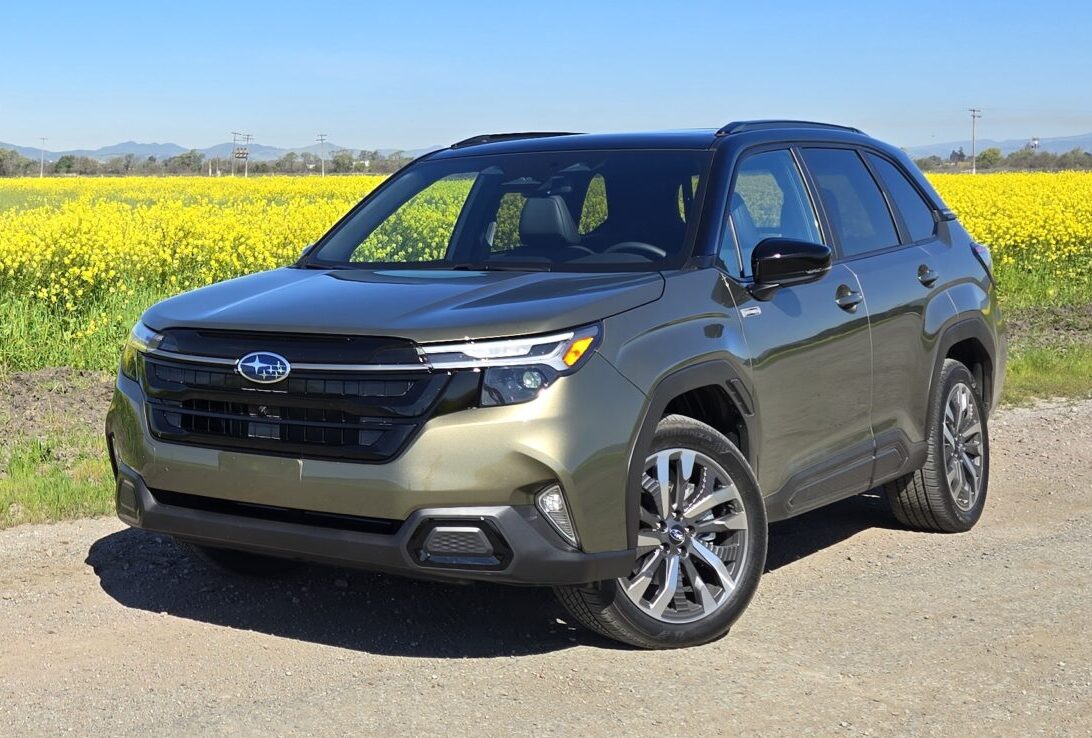
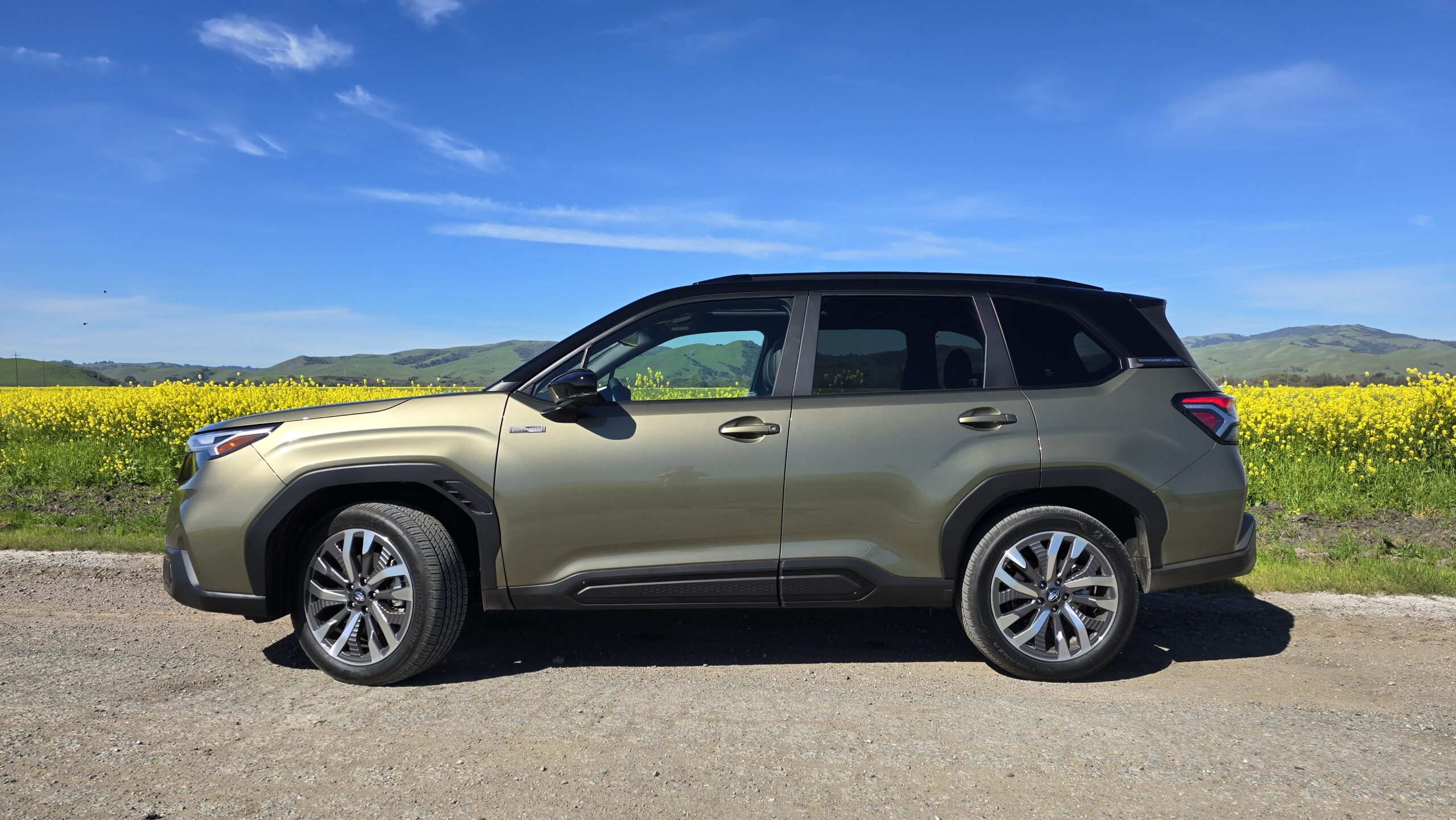
Starting with the exterior section, both models are sporting new looks, with the fully loaded RAV4 Limited and Forester Touring leaning more luxurious than their rugged predecessors. While there are tougher variants available, in this guise, the new RAV4 takes a clean and boxy look with body-colored elements throughout. Meanwhile, the Forester has less cladding than the previous generation, with a more subdued gloss black grille and less boxy shape overall. Both have contrast alloy wheels, though, with the RAV4’s being one inch larger at 20 vs. 19.
For the headlamps, both are rocking full LED headlamps with fog lamps as well. However, it’s only the Forester that has the premium feature of bending adaptive lights, for advanced visibility.
When we head to the sides, the Forester is slightly longer, with a 2-inch advantage over the RAV4. Rest assured, we will be talking about interior packaging, ride quality, and more later in this comparison.
Both also offer contrast black roof options, but this will depend on what trim you select.
Length: 183.3-inches (Forester) | 181.0-inches (RAV4)
Moving out back, they’re quite similar overall with exposed wipers, and spoilers up top. The Forester has an exposed exhaust outlet, though. For the taillights, the RAV4 is more premium with completely LED taillight units, instead of an incandescent turn signal on the Subaru.
For towing capacity, both can handle a maximum of 3,500 lbs, but the majority of RAV4 trims can actually achieve it, including this Limited. Only the Wilderness Forester can tow that much, so this 1,500 lbs rated Touring trim will be at a disadvantage.
At the mirrors, each of them has heating and blind-spot monitoring.
They also match each other for safety, with all major systems as standard equipment on these safety-oriented models. The RAV4 goes above and beyond with a standard Drive Recorder, which uses the existing cameras on the car to act like a dash cam.
That concludes the exteriors, so let’s check out the interiors.
Interior Design
Starting with the keys, both feature smart entry systems and support for remote start.
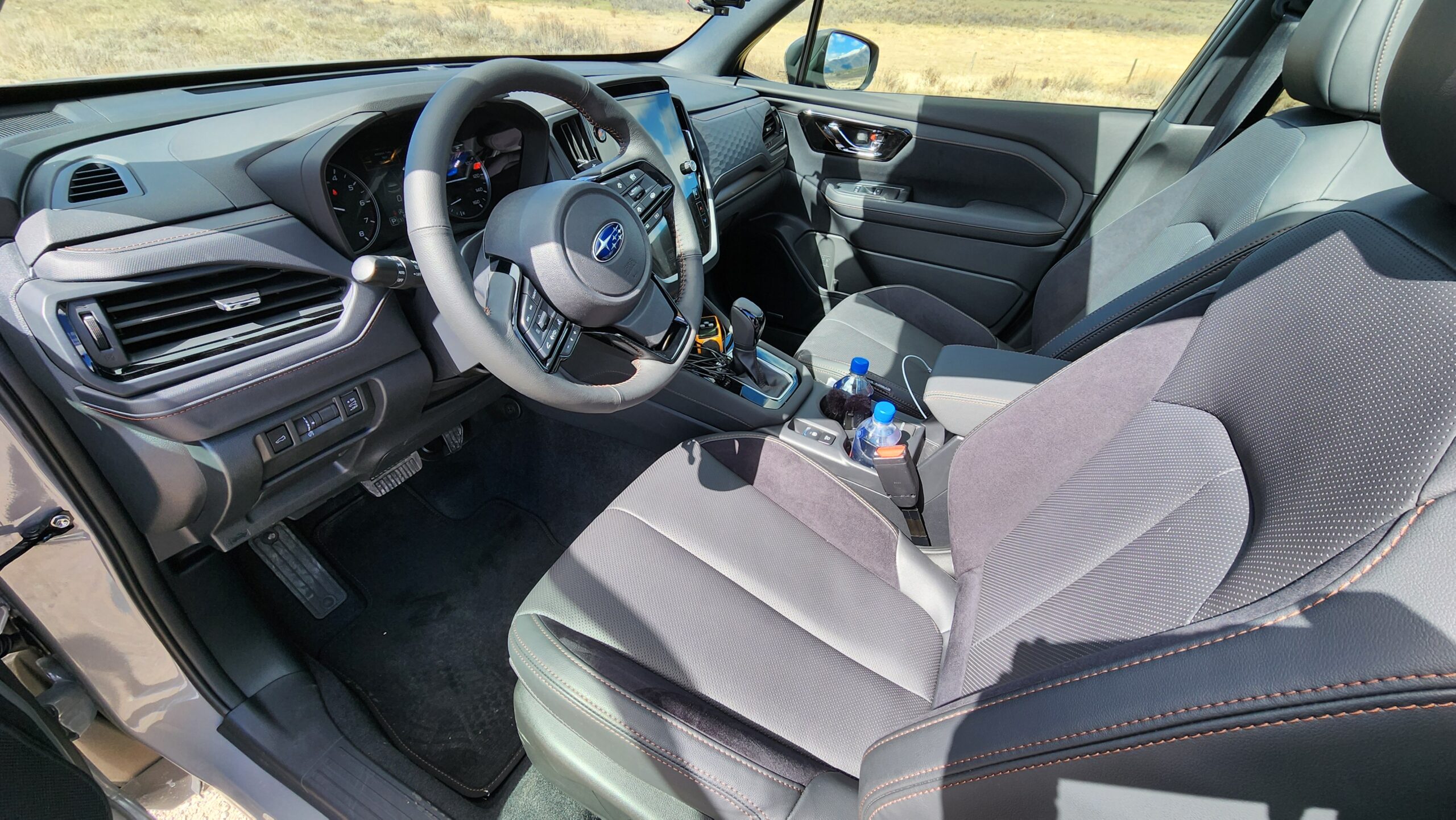
Opening the doors, you’ll see very practical and tech-filled cabins on both. But let’s start with the seats. The RAV4’s seats are wrapped in SofTex faux leather, but the Forester has the real deal for its seats: nappa leather, one of the industry’s best quality leathers. Both have 10 ways of adjustment, heating, ventilation, and memory.
Once inside, we can discuss the broad category of material quality, which we divide into solidity and material selections. The Forester leads the way in both categories, where it uses softer, solid-feeling, and more visually diverse materials that fit together better than the RAV4’s new cabin.
Firing them up, you’ll be greeted by digital gauge clusters on both, at an equivalent 12.3-inch size, with customization options such as putting Google Maps in there. As equipped, neither has a head-up display, so the digital clusters will have to suffice.
Pulling back to the steering wheels, we have heated, leatherette-wrapped, manual-adjusting wheels, with plenty of physical buttons. Both also feature rain-sensing wipers.
Storage and Technology
Next up is storage, where both models are bigger than ever. We will evaluate both the console and the multi-use cubbies in the dash. The consoles are quite large and equivalent on each. But RAV4’s console lid can flip upside down and turn into a table for something like eating. Beyond the console, the RAV4 continues its advantage, with more cubbies than the Subie, and even a passenger storage shelf.
Additionally, the RAV4 adds a second wireless phone charging pad on the Limited for 2026, a nice luxury touch.
Only the RAV4 has an electronic shifter, but in reverse, both feature 360-degree cameras. Due to the Forester’s screen orientation, the RAV4’s camera resolution is much clearer with both angles at the same time.
At the climate controls, we have two-zone automatic systems, with semi-physical controls in the form of buttons. Many functions are in the screens for both, so keep that in mind if you were looking for something with lots of knobs.
However, each has a physical volume knob for the audio systems. In the RAV4, you max out with a JBL 9-speaker system, but the Forester’s Harmon Kardon bumps you to 12-speakers. The Forester’s system is one segment’s finest.
RAV4: 9-Speaker JBL Audio
Forester: 12-speaker Harmon Kardon Audio
Now let’s look at the in-car technology, starting with the screens. When it comes to size, the RAV4 has a 10% advantage, with a maximum 12.9-inches over the Forester’s 11.6-inches.
For functionality, the Toyota continues with its advantages with its latest version of Toyota Multimedia. This means the software is much smoother, faster, and more customizable than the older Subaru system. Both feature Wireless CarPlay and Android Auto, with built-in navigation.
Wrapping things up in the front of the cabins, they both have auto-dimming mirrors with HomeLink and the rear camera ability.
They also have panoramic sunroofs on these top models.
LOOKING TO BUY One OF THEse VEHICLES?
A smart next step would be to check our Car Quote Tool. This tool will connect you with local dealerships in your area to get you the BEST price, access to INVOICE PRICING information, and a monthly payment calculator. Get dealerships to compete for your business!
Rear Seats and Cargo
Things continue to heat up in the back of these two, so let’s dive right in. Starting with the back seat space, the numbers say there is not enough of a difference on paper in the advantage of either competitor. But, when we measure the practical kneeroom with our ruler, it reveals the Forester is realistically roomier, with almost 3-inches for extra space behind Drew’s 5’8” driving position.
Forester: Legroom: 39.4 inches | Headroom: 37.7-inches
RAV4: 37.8 inches for legroom | Headroom: 39.5-in
As far as the features go, they are each equivalent and luxurious. Both seatbacks offer room to recline, vents, USBs, and heated seats.
Out back, both models have hands-free tailgates to access the cargo areas.
Earlier, we discussed the Forester had a 3-inch length advantage, but the RAV4 packaging actually has the advantage. Behind the second row, it has a whopping 30% advantage, though the maximum spaces are almost identical.
Keep this in mind if you often road-trip with the back seats occupied.
While the Subie has handy cargo space handles to fold the rear seats easily, it’s only the RAV4 with a spare tire as equipped.
Forester: Behind 2nd row: 27.5 cubic feet | Max: 69.1 cu.ft
RAV4: Behind 2nd row: 37.8 cubic feet | 70.4 cu.ft with the seats folded
That wraps up the interiors but now let’s take this fight to the streets!
Powertrains
For many years, the Forester trailed behind the RAV4 without offering a hybrid engine, but those days are no longer! However, these hybrid systems have different heartbeats, as the Subie uses its signature boxer-4-cylinder engine, and the RAV4 has a traditional Inline-4 cylinder. Power and acceleration lean heavily in favor of the RAV4, with 42 hp more and a 0-60 that is almost 2 seconds quicker to 60 MPH.
Forester Hybrid: 2.5L Boxer-4 + elec: 194 hp | — lb.ft | 0-60 MPH (Car & Driver): 8.6s
RAV4 Hybrid: 2.5L I-4 + electric motors: 236 hp | — lb.ft | 0-60 MPH (Car & Driver): 7.1s
Transmission-wise, both use an eCVT which is plenty responsive on both, providing instant power. But, in typical Subaru fashion, the Forester is more suited to go off-road. While both trims tested have standard AWD, the Subie has a more capable full-time Symmetrical AWD system with variable torque distribution ability, compared to an independent rear electric motor providing the back wheels power in the RAV4.
Test Drive and Fuel Economy
Furthermore, the Forester’s additional 0.6 inches ground clearance would be helpful when going off the beaten path. If off-road performance matters even more to you, you can shop the Woodland or Wilderness trims of the RAV4 and Forester, respectively.
Now let’s discuss ride and handling. While neither of these crossovers are backroad champs, ride quality is where they truly shine. Both soak up road imperfections with ease, even on the rough roads both were driven on. We would give the slight edge to the Subie with the extra cush in its suspension and smaller wheels.
Sound isolation is also important, which is why we take sound-level readings of every vehicle we test here at Car Confections. Scientifically speaking, most adults cannot discern a difference of less than 1 dB between sounds. Based on our initial testing in different states, the Forester has the potential to be quieter, but for now we can’t officially judge this matter.
Forester: 55.9 dB @ 55 MPH
RAV4: 58.7 dB @ 55 MPH
Finally, let’s talk about the all-important aspect of fuel economy. While the Forester is much more efficient with its new hybrid, the RAV4 still holds a 7 MPG combined advantage. However, both models will save you more money than the average crossover at the fuel pumps.
Something worth noting for those not ready to adopt a hybrid yet, the RAV4 is hybrid-only while the Forester offers the choice of a gas-only engine.
Forester Hybrid: 35/34/35 MPG
RAV4 Hybrid: 44/39/42 MPG
Reliability & Resale Value
In our reviews and comparisons, we are also adding in reliability and resale information to give you a better picture of the overall value beyond just the original MSRP.
Beginning with reliability, we developed the Combined Reliability Index, which takes into account several studies from trustworthy sources and combines them in a way that gives a more realistic picture. In this respect, they are some of the strongest brand’s money can buy. Subaru is rated 11 spots above the industry average, and Toyota is 15 spots above average.
Related to that, they have the same general warranty coverage, but Toyota offers the perk of complimentary maintenance for 2 years.
Forester: Warranty: Basic Warranty: 3yr/36k mi | Powertrain: 5yr/60k mi | Comp Main: NA
RAV4: Warranty: Basic Warranty: 3yr/36k mi | Powertrain: 5yr/60k mi | Comp Main: 2 yrs
We also put Mason’s economics degree to work to develop a detailed Predicted Resale Value tool. After 5 years and 60,000 miles, Toyota has one the highest resale values in the entire auto industry, at 64.50% expected retained value. Subaru is not far behind with 63.03% after 5 years and 60,000 miles.
I want to emphasize that if money, reliability or resale value matter less to you personally, feel free to disregard these points. And if you’d like to check out all our data about reliability and resale values, as well as learn about our methodology, make sure to head to www.carconfections.com/resale and www.carconfections.com/reliability. Buying a car is a big decision, and this is a great place to compare all the makes you might be cross-shopping.
Price Evaluation
Now let’s talk about pricing.
Both models will push the budget when it comes to the equipment we have today. The RAV4 has one of the highest MSRPs in the segment, and the upgrade to the Forester Hybrid is quite costly as well. This means they will be neck and neck, over 45 grand.
Forester (Touring HEV AWD): $43,295 | Options: +$495 | Destination: $1,420 | Total: $45,210
RAV4 (Limited HEV AWD): $43,300 | Options: +$1,240 | Destination: $1,450 | Total: $45,990
With only $780 between these two today, there will not be a notable value difference between them.
2026 Toyota RAV4 vs. 2026 Subaru Forester Winner!
So, there you have it: the objective winner! Do you agree? Here are a few things to consider when picking each one for you personally:
Forester:
- Nicer seat materials
- More luxurious interior finishes
- More capable AWD system
RAV4:
- Better fuel economy
- Cargo space behind the second row
- Features Advantages (Screen Size, Dual Chargers, Drive Recorder)
Now we want to know your opinions, so make sure to head to the comment section and let us know which one you would pick!
Thanks for joining us for another Car Confections Comparison! We’ll catch you next time as we sample the latest automotive delicacies!









Recent Comments