
Subarus have long had a reputation for being hardy and capable vehicles, in addition to being safe and dependable transportation. But one of their most important models just changed perhaps more than ever before! That’s right, the very important Outback has just been completely redesigned, and its new SUV shape will probably have more people than ever wondering: who’s the best pick in a 2026 Subaru Outback vs. Subaru Forester comparison? That’s what we are going to find out today!




Exterior Design
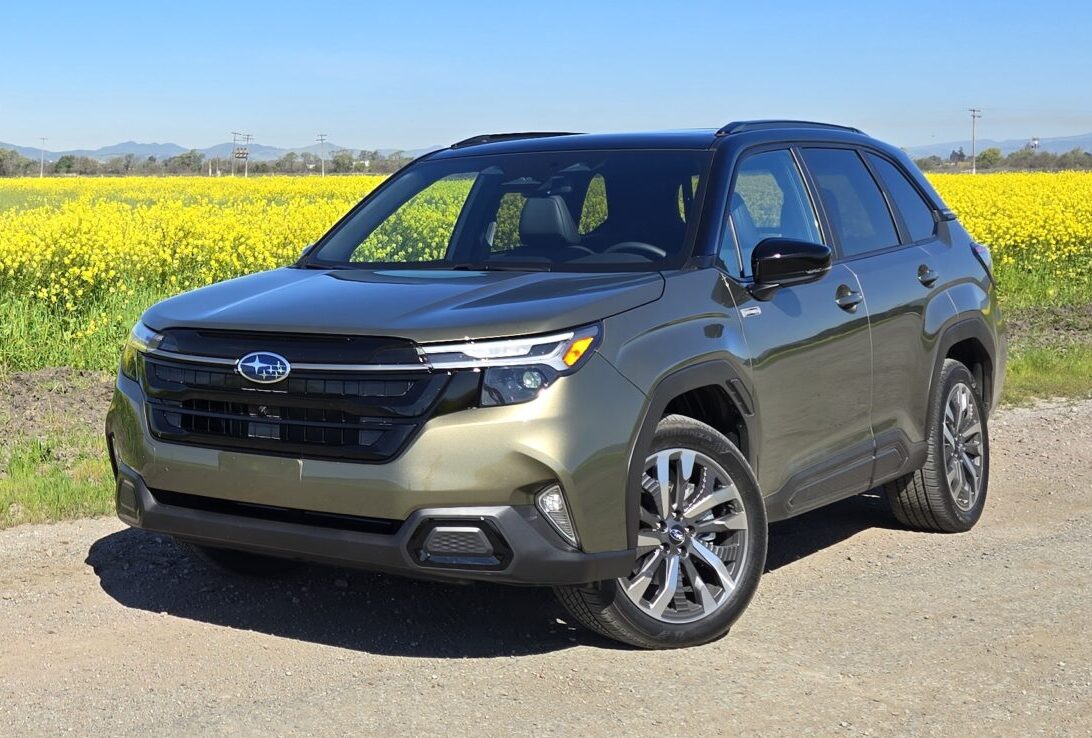
The exterior designs on each mark a new chapter for Subaru. While each still has a rugged edge to them, both the Outback and Forester look more upscale than ever. The major transition here, though, is the Outback losing its traditional wagon shape in favor of a more SUV-like design for 2026. Both have plenty of cladding, but the Outback remains the more rugged looking of the two.
We will leave the design preferences to you, but we will focus on and grade the individual features. That starts with the lighting, where both have impressive projector LED headlights that are adaptive. Both also include the increasingly rare feature of LED fog lamps.
Both vehicles have 8.7 inches of ground clearance for when the going gets tough.
Moving to the wheels, the Subies also share 19-inch alloy wheels surrounded by thick cladding.
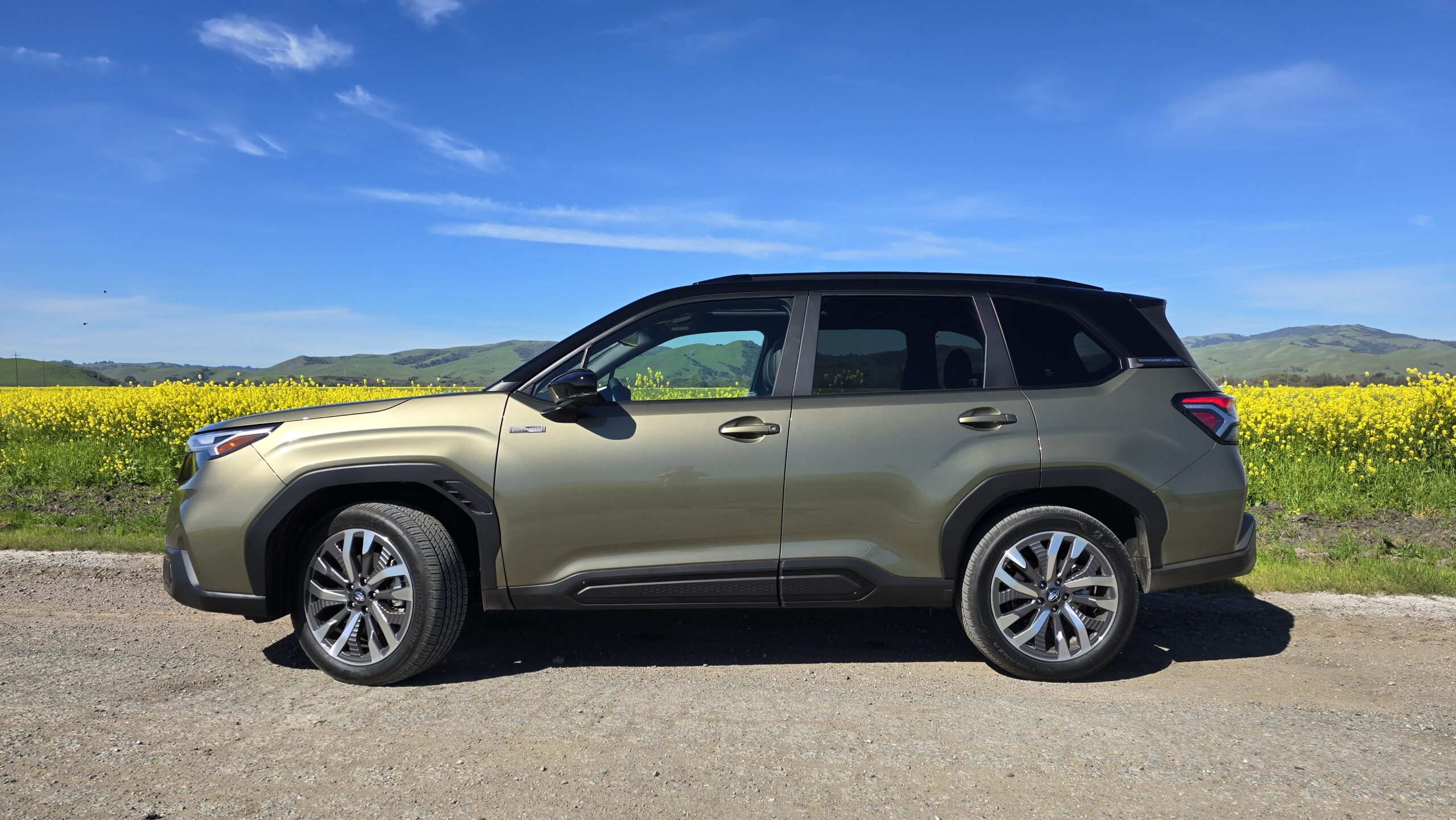
This side view is a great place to see the sizing differences well. The Outback is something of a tweener, fitting in between compact SUVs, like the Forester, and larger mid-size SUVs, like a 4Runner. For this comparison specifically, there are 9 inches of length separating these two, which is why we will spend time later discussing interior space.
Only the smaller Forester offers a Black Painted roof for even more design flare.
Length: 191.7-inches (Outback) | 183.3-inches (Forester)
Out back, both the Outback and Forester share the same features of exposed wipers, hidden exhaust outlets and partially LED taillamps.
However, it’s the larger Outback that can tow up to 3,500 lbs, as compared to only 1,500 on the Forester.
Feel free to keep your own score along the way based on what is most important to you.
Towing: 3,500 lbs. (Outback XT) | 1,500 lbs. (Forester HEV)
Heading to the mirrors, they both offer BSM and heating, but only the Outback has power folding.
For safety, as expected from Subaru, each offers the EyeSight suite of safety systems as standard equipment, including things like Rear Auto Braking. The Touring Outback one-ups all the other Subaru’s for 2026 though, by being the first model in their lineup with a Hands-Free Highway Driving Assistant on eligible mapped roads!
But the differences only get bigger from here, so let’s hop inside.
Interior Design
Approaching each, they have smart entry systems with the typical Subaru key fob. Remote start is available via the Subaru app.
Note: It is included free during the trial period.
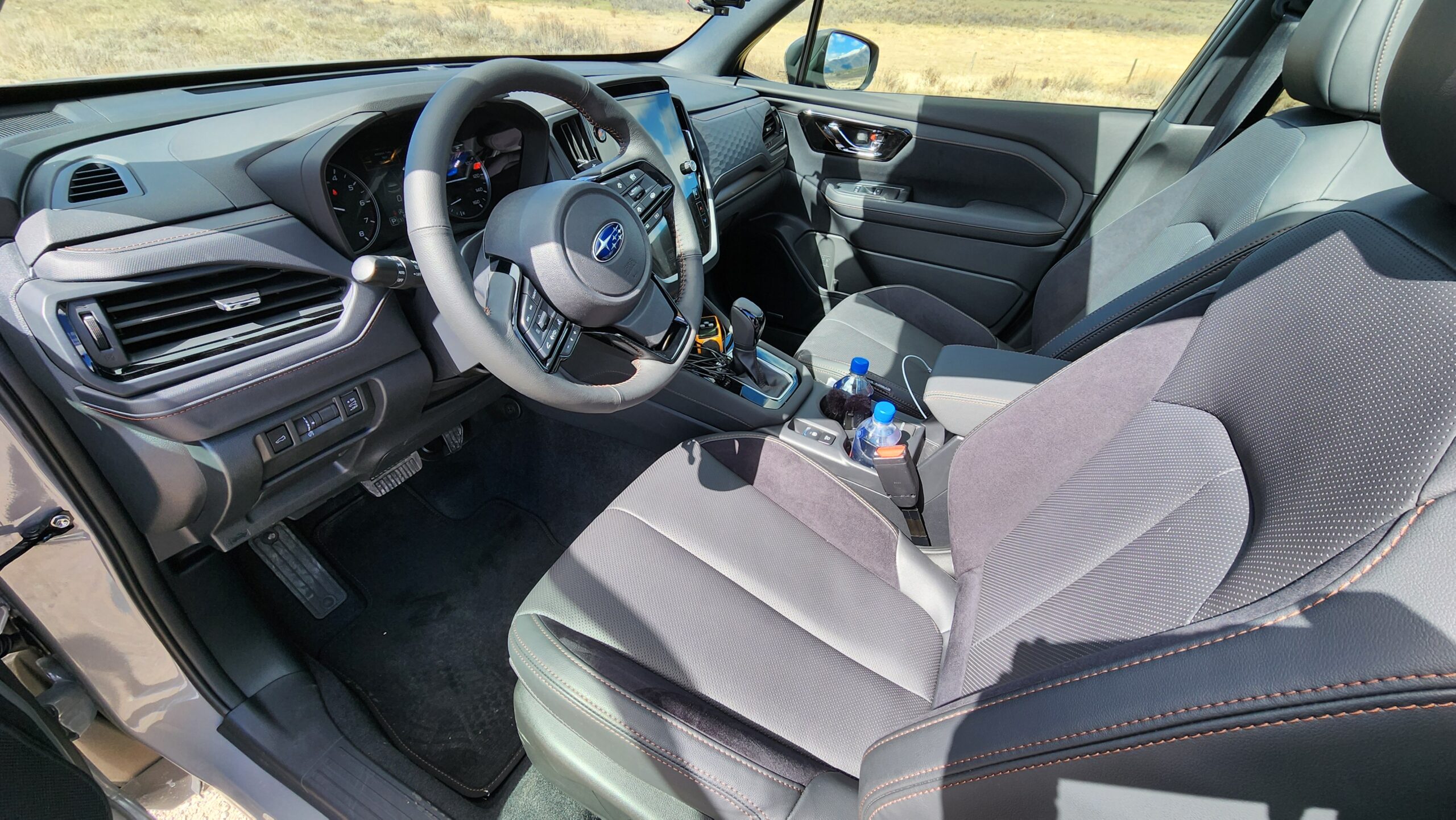
Looking inside, you’ll see an all-new cabin design for the Outback, and a more familiar one with the Forester.
But let’s start checking out differences, beginning with the seats. Both are finished in real leather, but the Outback has a nicer grade of Nappa Leather on its seats.
Both share the features of heating, ventilation, and memory, but the Outback once again steps things up with 2-more ways of adjustment, for a total of 12, with a manual thigh extension.
Once inside the cabins, we can assess both the overall quality and the materials used throughout. Both have the sturdy build we’ve come to expect from Subaru, with great fit-and-finish. And, for materials, while the Outback may look more luxurious with the brown color we have equipped, these two are quite similar. There’s generous use of leatherette and suede wrapping, and the Outback has a non-Piano Black trim on its console, while the Forester’s console area is padded. Overall, we’ll call this area even.
After startup, you’ll see Subaru’s newest full digital gauge cluster, measuring in at 12.3-inches. The Outback has a different software version and graphics.
Neither have head-up displays, but they will both have heated and leather-wrapped steering wheels, accented by rain-sensing wipers.
Storage and Technology
Now, let’s evaluate the storage by looking at both the center console space and additional storage cubbies. Starting with the center consoles, while we couldn’t bring the official donuts on the press drives, they have large bins with very similar space. Beyond their consoles, while they share cup holders, a wireless charging pad, and additional cubbies, only the Outback has a passenger storage shelf with a cool groove next to it for cord management.
Once you shift the traditional shifters into reverse, you’ll see 360-degree cameras on these top trims. But it’s the Outback’s display that allows for multiple perspectives to be viewed at the same time.
For climate, both have dual-zone automatic setups with physical buttons for the main temperature adjustment. But Subaru listened to customers in the new Outback and took all the rest of the climate controls out of the screen for 2026.
Also, a physical control is the volume knob, so let’s test the Harmon Kardon systems on each. While the Outback squeezes in one additional speaker, audio quality will be the same. They both are very impressive for their respective segments.
Forester: 11-speaker Harmon Kardon
Outback: 12-speaker Harmon Kardon
Another big Outback change this year is in-car tech, so let’s talk about it! This new generation has a 12.4-inch display running Subie’s NEW software, which is larger than the 11.6-inch display on the Forester’s portrait style screen. And, while they both have Wireless phone connectivity and built-in Nav, the newest generation software has much less lag and is easier to use, an important update many Subaru owners have been asking for.
Wrapping up the front of the cabins, both have auto-dimming mirrors with camera ability and sunroofs. But it’s the Forester with the larger Panoramic roof.
LOOKING TO BUY One OF THEse VEHICLES?
A smart next step would be to check our Car Quote Tool. This tool will connect you with local dealerships in your area to get you the BEST price, access to INVOICE PRICING information, and a monthly payment calculator. Get dealerships to compete for your business!
Rear Seats and Cargo
Now, checking out the back seats, let’s see if the size difference will benefit the Outback’s score. Surprisingly, it doesn’t! The Outback only outdoes the Forester by 0.1 inches of legroom, although it has 3% greater headroom with the new taller body style.
Forester: Legroom: 39.4 inches | Headroom: 37.7 inches
Outback: Legroom: 39.5-inches | Headroom: 39.1 inches
Comfort continues as we look at the features, where they both offer heated reclining seats, USBs, vents, and a fold-down center armrest.
Now let’s assess the cargo areas of these two crossovers, where they both have hands-free power tailgates.
Remember when the length difference didn’t matter in the back seats?? Yeah… that changes in the cargo hold. With the Outback’s length and newfound roofline advantages, it has a 22% advantage behind the second row, and an almost 15% advantage as a maximum. While your rear passengers may be cozy no matter which model you pick, there’s a big difference in how much luggage they can bring along.
Forester: Behind 2nd row: 27.5 cu. ft | Maximum: 69.1 cu. ft (w/ pano)
Outback: Behind 2nd Row: 34.6 cu. ft. | Maximum: 80.1 cubic feet
When it comes to cargo features, they both have switches that fold the second row.
But, as equipped, only the Outback has a spare tire.
Like any sibling rivalry, the fight won’t stop until the very end, so now let’s take them out to the streets!
Powertrains
When you pay top dollar for the Forester and Outback, you get to upgrade the engines. Both crossovers start with the same 180 hp 2.5L Boxer 4-cylinder, but the upgraded options are very different. The Outback swaps in a turbocharged 2.4L Boxer, with 260 hp, while the Forester adds in hybrid electric componentry, to make 194 hp. More details are coming in a bit, nevertheless, it’s the Outback that is much quicker to 60 with 66 more horsepower.
Forester: 2.5L Boxer-4 + elec: 194 hp
Outback: 2.4L Turbo Boxer-4: 260 hp | 277 lb.ft
Transmission-wise, the Outback has a traditional CVT, while the Hybrid has a similarly performing eCVT.
And, despite the Hybrid system on the Forester, both retain Subaru’s renowned Symmetrical AWD system. This means they both excel in light and medium off-road environments, and if you want to tackle anything more extreme, they both offer Wilderness trims.
Test Drive and Fuel Economy
When it comes to ride quality and dynamics, both do a great job of soaking up big bumps in the road. With many platform elements and 19-inch wheels shared between them, there is not a noticeable difference that we can score, as both will be some of the best for the money. For this reason, neither will be too keen on hitting a backroad.
But, how quiet are the cabins? Here at Car Confections, we take sound level readings of every vehicle we test on our channel. Unfortunately, both measurements were taken at press events abroad, so they can’t be scored officially, but here are our readings for your reference until we get them back home in Kentucky for an official test.
Forester: 55.9 dB @ 55 MPH
Outback: 59.5 dB @ 55 MPH
Finally, for fuel economy, it’s of no surprise that the Hybridized Forester runs circles around the XT Outback, holding a significant advantage in all rating figures, including an 11 MPG combined advantage. This will certainly be noticed at the fuel pump.
While signs point to a potential Outback Hybrid in the future, there is currently no such option for this model.
Forester HEV AWD: 35/34/35 MPG
Outback XT AWD: 21/29/24 MPG
Resale & Reliability
As the Forester and Outback come from the same brand, they will share the same predicted reliability, warranty, and resale value information. Subaru scores above average in all these categories. One note is that for 2026, the build locations of these models change, with the Forester now being built in Indiana and the Outback in Japan.
And if you’d like to check out all our data about reliability and resale values, as well as learn about our methodology, make sure to head to carconfections.com/resale and /reliability. Buying a car is a big decision, and this is a great place to compare all the makes you might be cross-shopping.
Price Assessment
Now let’s break down the cost of these two and evaluate how much value each model is delivering.
As typical with any redesign, both models saw price increases, but one more than the other. The Outback is now nipping at the heels of the $50,000 mark, for the loaded Touring XT. Meanwhile, the Forester Touring Hybrid is solidly at the mid-40k mark. Still, this means that these two models have a lot of price overlap as you move up the trim structures.
Forester (Touring HEV AWD): $43,295 | Options: +$495 | Destination: $1,420 | Total: $45,210
Outback (Touring XT AWD): $47,995 | Options: +$0 | Destination: $1,450 | Total: $49,445
Nevertheless, there will be a $4,235 price difference between them, to be exact.
2026 Subaru Outback vs. Subaru Forester Winner!
So, there you have it, that was a close one! Here are a couple of things to consider when picking each one for you personally:
Forester:
- Available Hybrid engine
- More affordable
- More exciting design options (black roof)
Outback:
- Additional features throughout
- Much larger cargo capacity
- More powerful turbo engine
Now we want to know your opinions, so make sure to head to the comment section and let us know which one you would pick!
Thanks for joining us for another Car Confections Comparison! We’ll catch you next time as we sample the latest automotive delicacies!









Recent Comments