
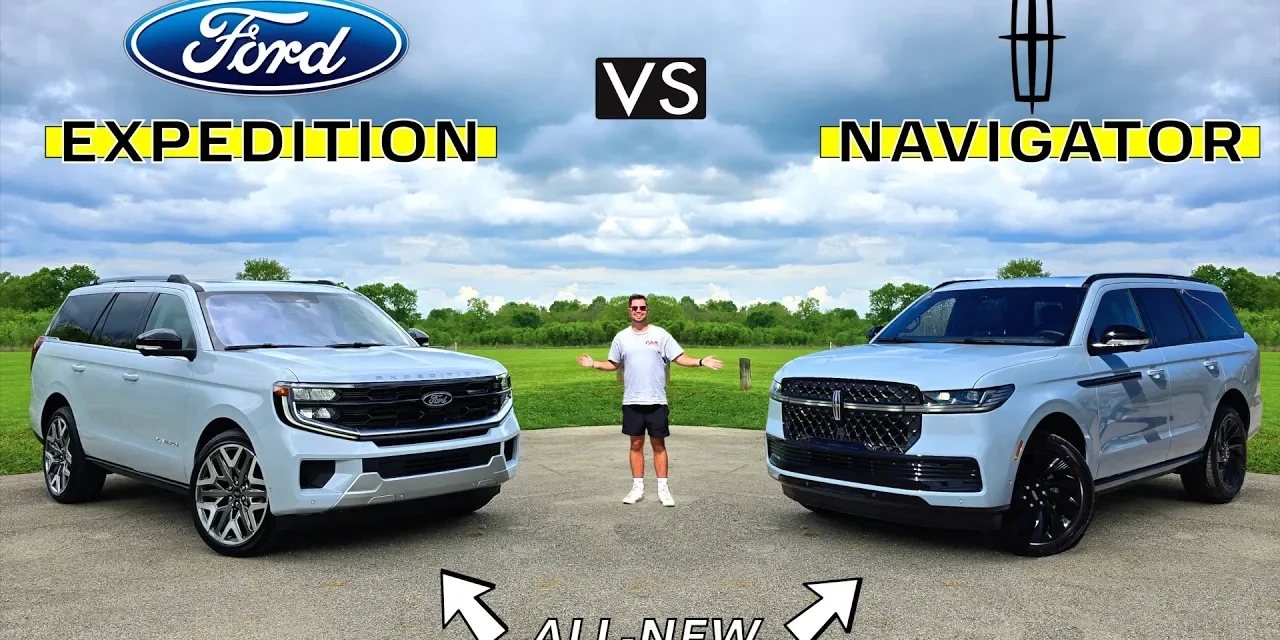
When it comes to large SUVs, one of the most popular and best choices for American shoppers has long been the Ford Expedition. It has loads of space, luxury and features for the fam, and it just got fully redesigned for 2025. But, for those who desire the finer things in life, there is the related Lincoln Navigator, which was also redesigned this year with a huge emphasis on tech. So, who is the best pick in a 2025 Lincoln Navigator vs. 2025 Ford Expedition battle? Well, that is what we are going to find out today!
Pricing and Equipment
So one of the crucial elements of this comparison is the price discrepancy, so let’s mention that quickly before we get into all the other elements.
Now if you haven’t looked at large SUVs in a while, you may have some initial sticker shock for both of these. The all-new Expedition comes in at a price just shy of $90,000, when you add all the bells and whistles in its Platinum Ultimate trim.
MSRP (Platinum Ultimate 4WD): $88,000 | Options: $0 | Destination: $1,995 | Total: $89,995
Unsurprisingly, the luxury-oriented Lincoln demands a higher price tag but it may not be quite as different as you would expect. A nicely equipped Reserve model with the same kind of features, stickers at $108,000.
MSRP (Reserve Jet 4WD): $102,995 | Options: $3,615 | Destination: $1,995 | Total: $108,605
Exterior Design
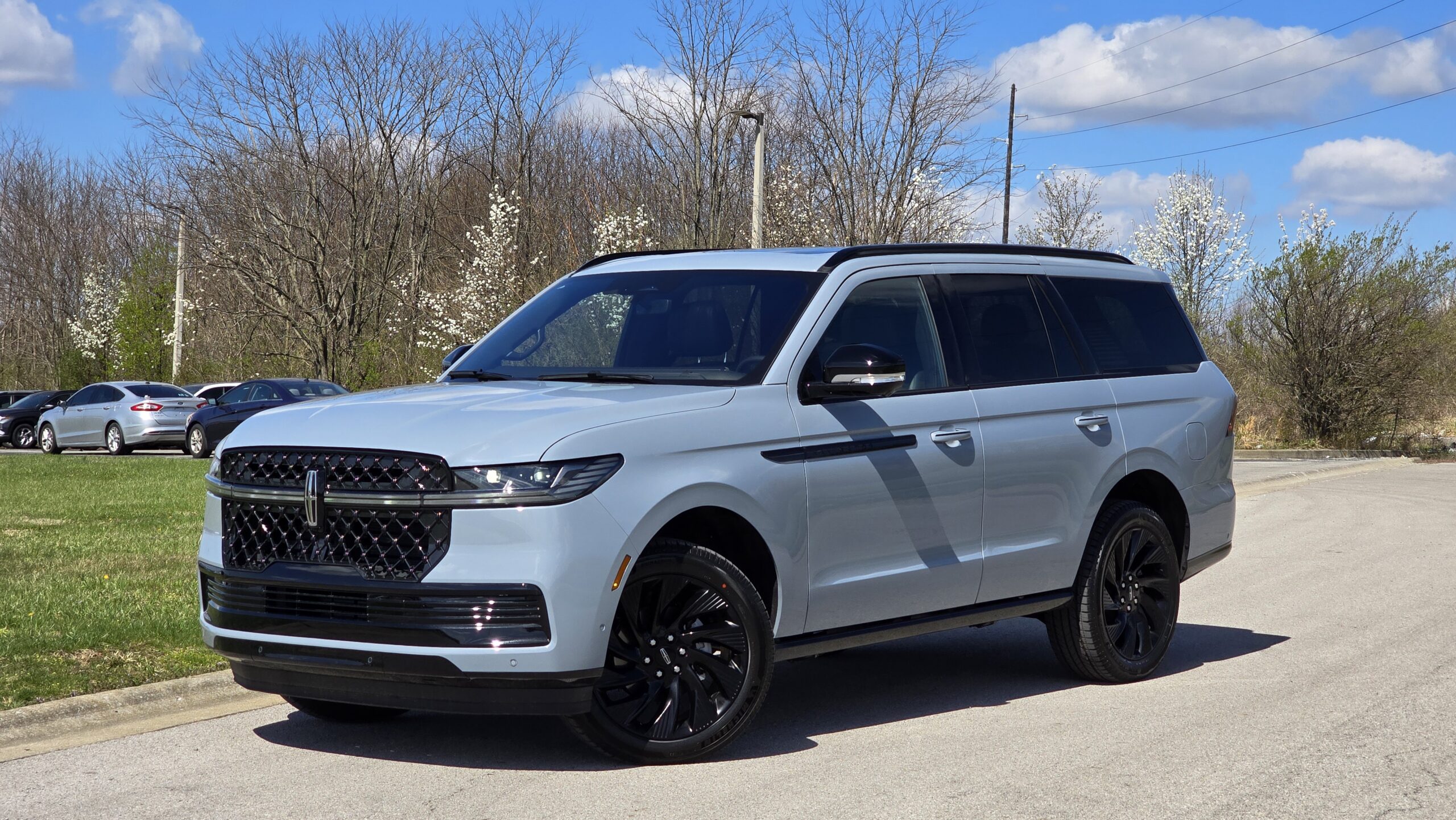
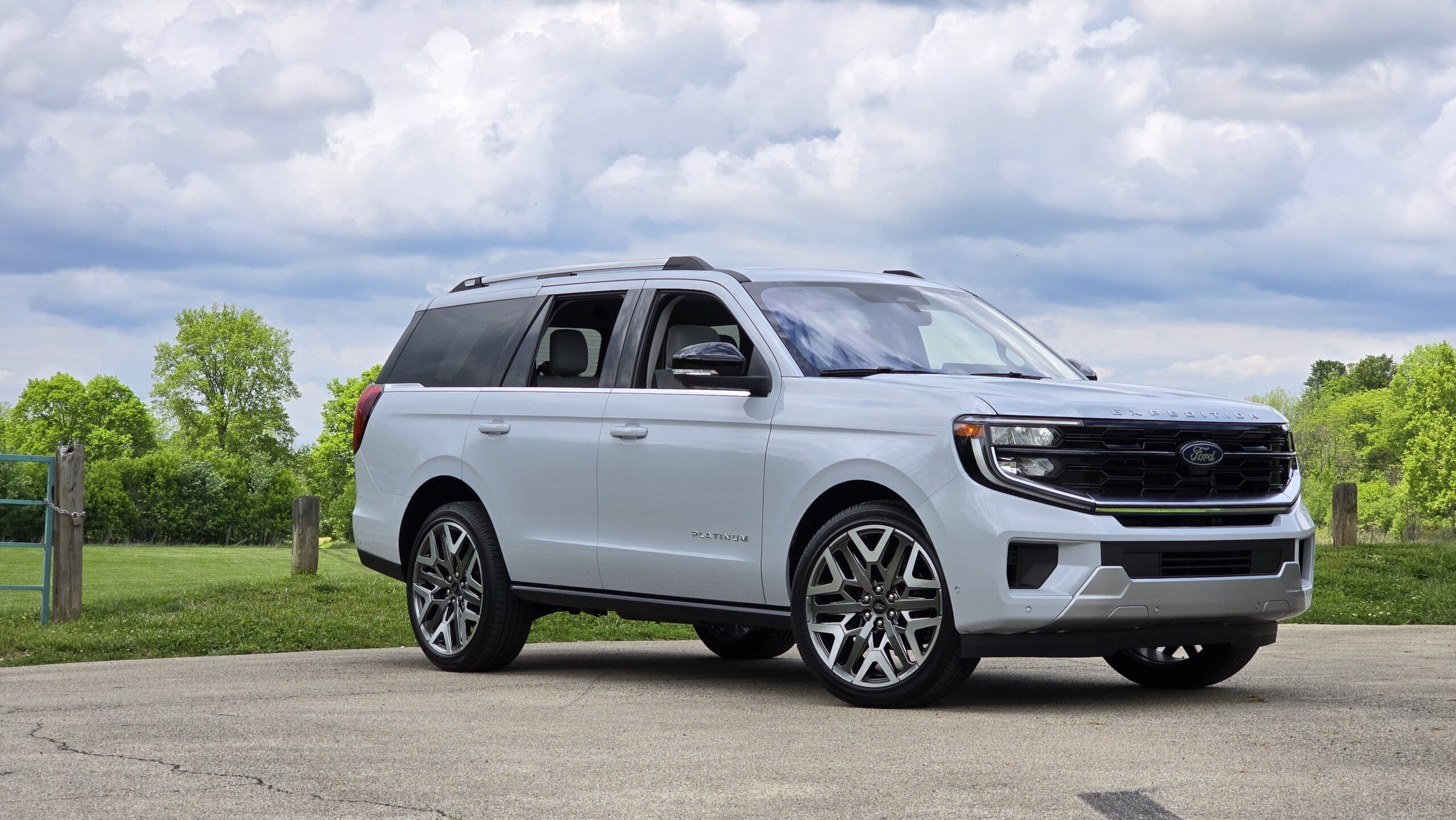
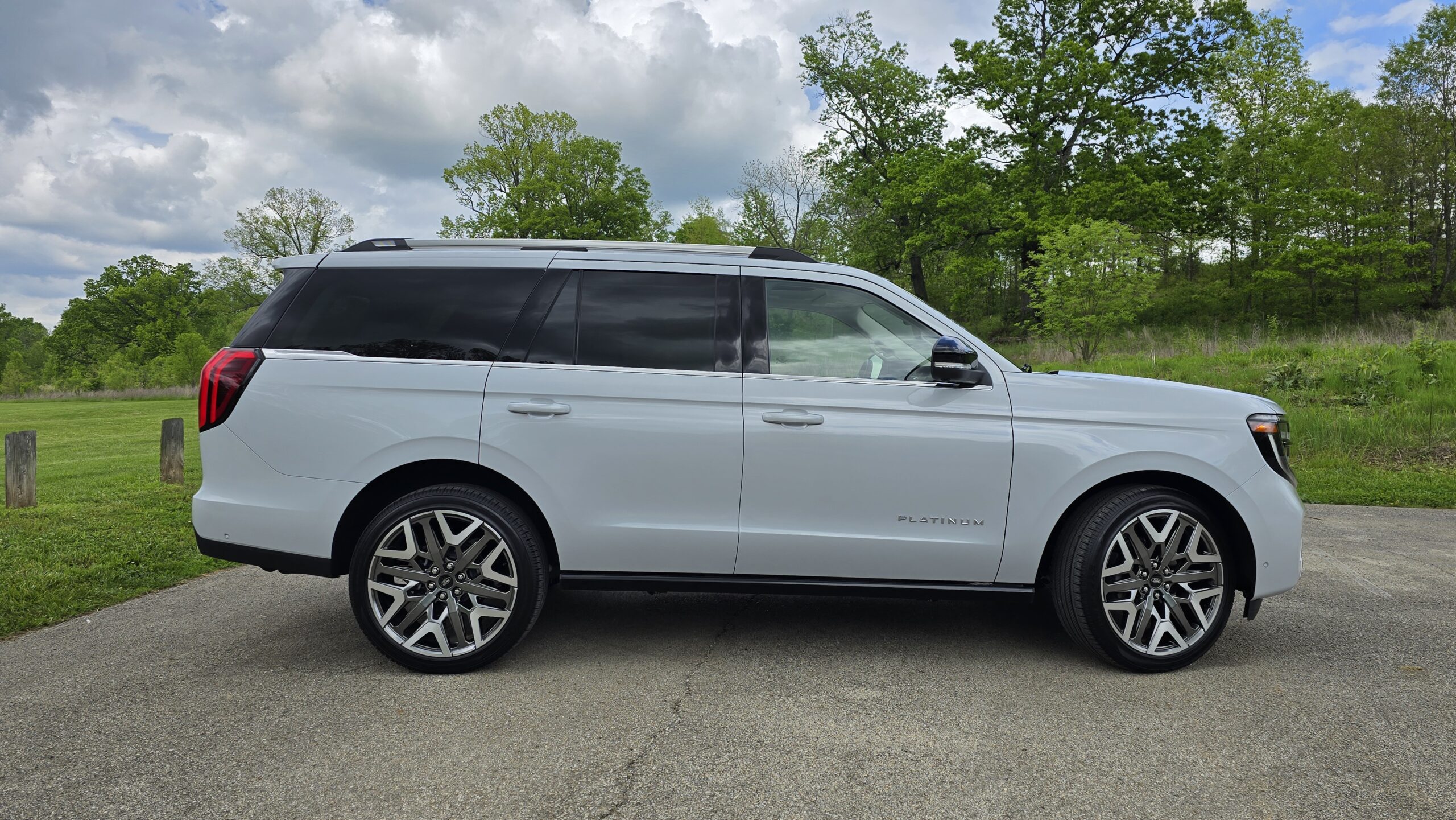
Walking up to their exterior designs, despite their relation to one another you really wouldn’t know that from their front ends. Both have presence, and while there are versions with lots of blingy chrome, these models have gone for a sportier blacked-out look, as equipped. We don’t award points for styling differences but let us know which design you prefer in the comments below.
Now what is point worthy are their headlights. They feature LED lighting, of course, but it’s only the Lincoln that has projector LEDs plus entry and exit animations with dynamic turn signals. Neither of them has fog lamps.
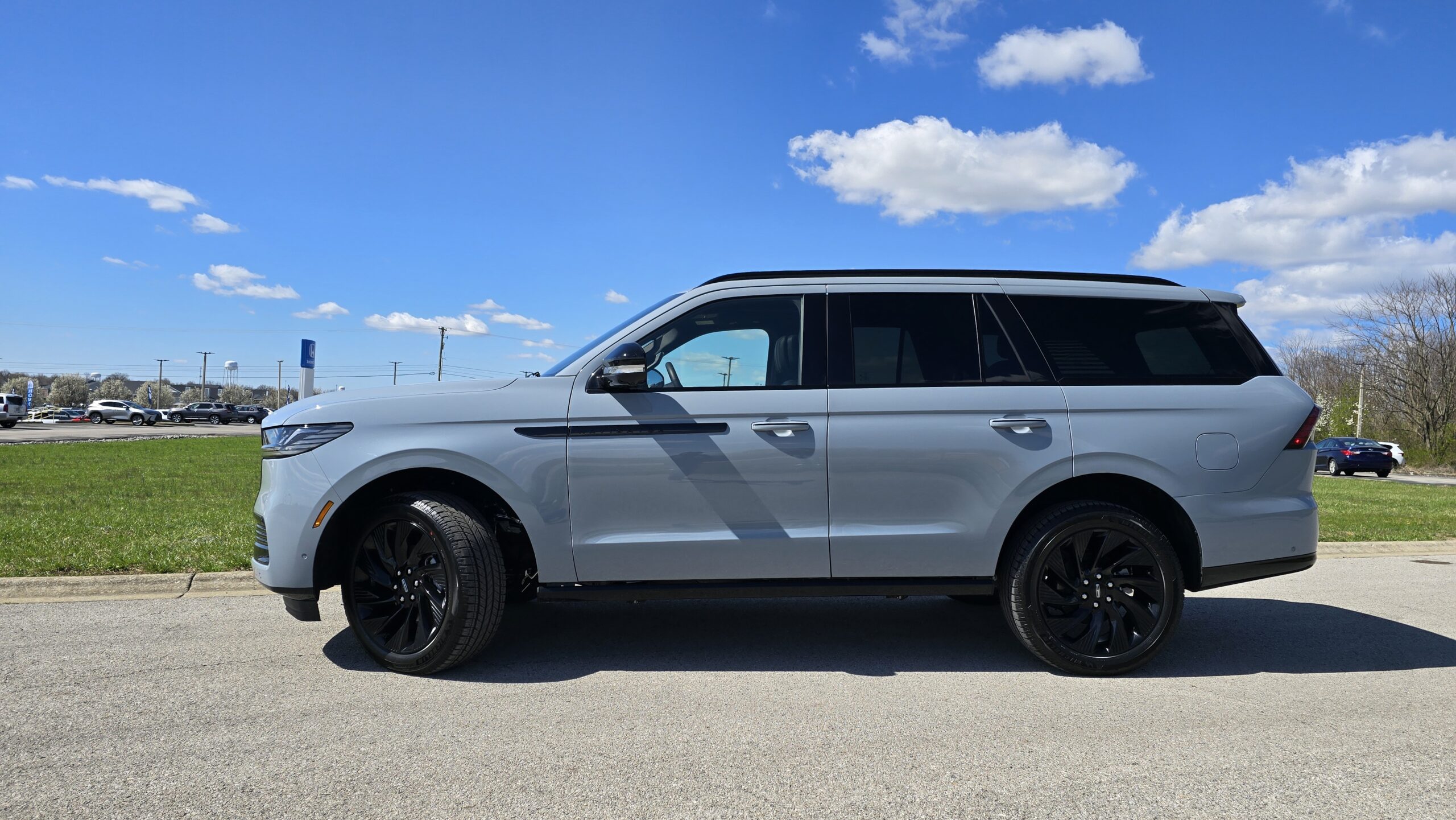
Heading around to the side, this is a great place to get a sense of just how big these two are. They can get even bigger, too, in their extended wheelbase versions, which range all the way up to about 221 inches in length.
Lengths: Expedition: 209.9-inches | Navigator: 210.0-inches
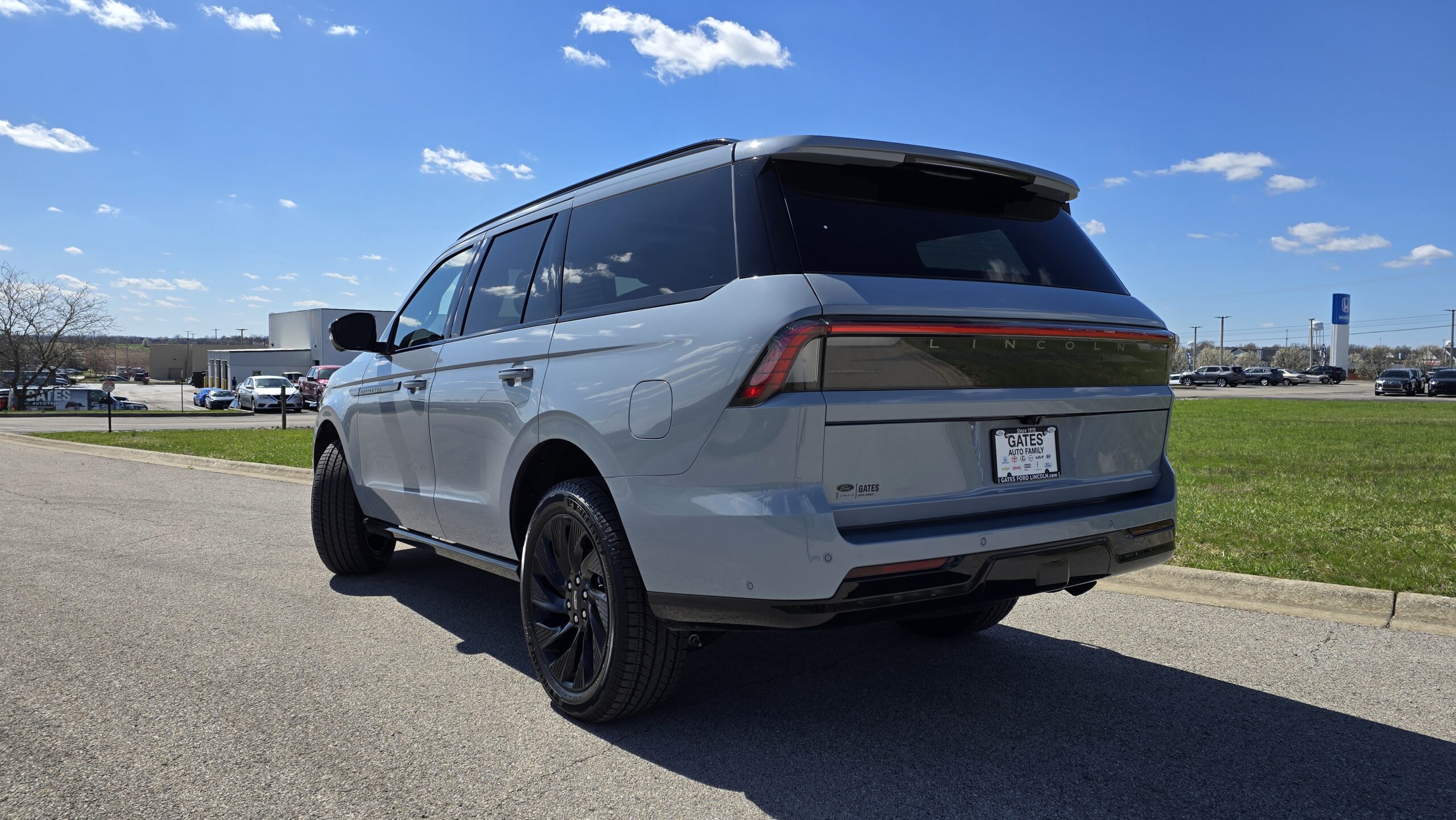
Now even though their sides look very similar to each other, their wheels certainly do not. In the Lincoln we have a fully blacked out look compared to a contrast design on the Expedition. That’s not all, though, since the Expedition is the one rocking larger 24-inch wheels compared to the 22s on this Navigator. While those huge wheels are available on the Navigator, it’ll cost you even more. However, a Lincoln-exclusive is that it has an available two-tone painted roof.
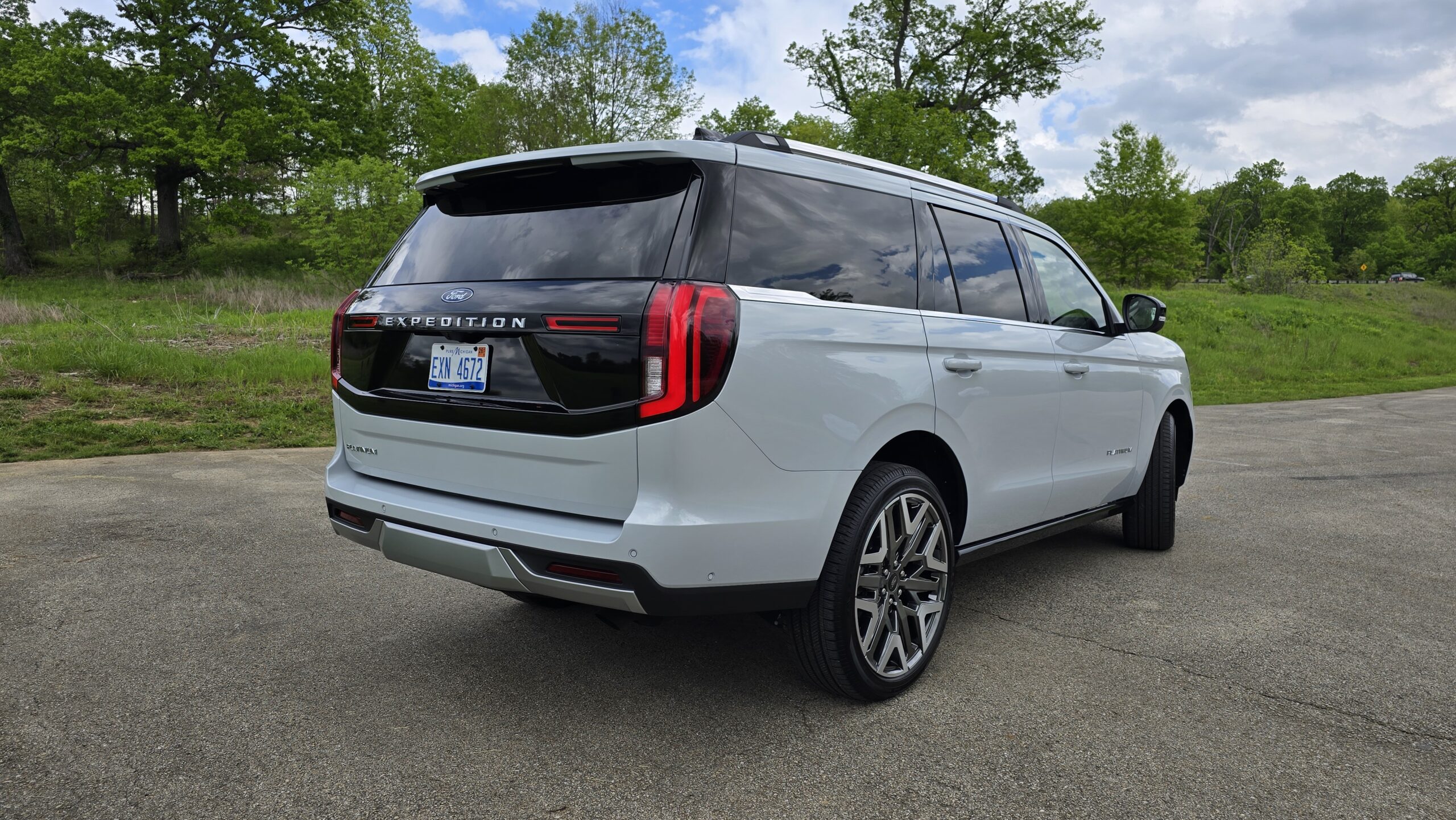
In the rear, they once again look quite different. The Lincoln has a more traditional design since, controversially, half of the Expedition’s tailgate is black regardless of exterior color. Features-wise, they have spoilers, hidden wipers, and fully LED taillights.
In addition, as body-on-frame SUV’s, they have large amounts of capability: 9,600 and 8,700 lbs of towing in the Ford and Lincoln respectively. That’s greater than a 5% difference, so we will award it a half point.
Expedition: 9,600 lbs. | Navigator: 8,700 lbs.
Additional Features
For other features, they have fully loaded mirrors with power folding and auto-dimming, plus they both also have every single active safety system as standard equipment. An advanced semi-autonomous highway driving system is part of that package, called BlueCruise, but keep in mind the Lincoln’s subscription is included for an additional 3 years before you must pay for it.
Trial Period: Expedition (Plat Ult): 1 Year | Navigator (all): 4 Years
Warranty-wise, the Lincoln once again excels. It is backed by a significantly longer warranty than the Expedition in both basic and powertrain, although neither include complimentary maintenance.
Navigator Warranty: Basic Warranty: 4yr/50k mi | Powertrain: 6yr/70k mi | Comp Main: N/A
Expedition Warranty: Basic Warranty: 3yr/36k mi | Powertrain: 5yr/60k mi | Comp Main: N/A
Alrighty, that wraps up the exterior, and I promise there are very impressive cabins coming up.
Interior Design
Walking up, both have smart entry systems and remote start on the exact same key fob design. Both also have the fan-favorite power running boards, but neither include soft-close doors.
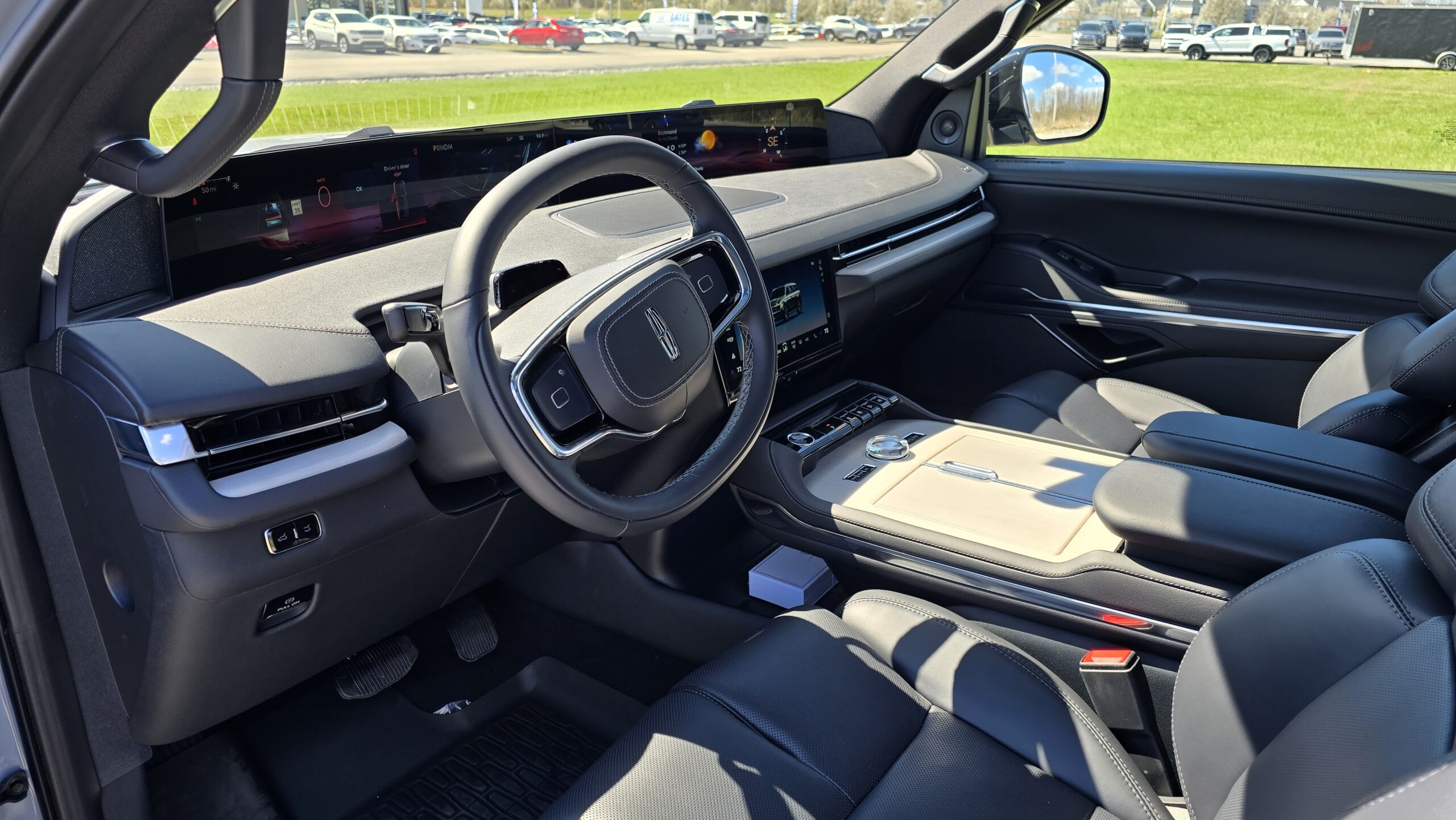
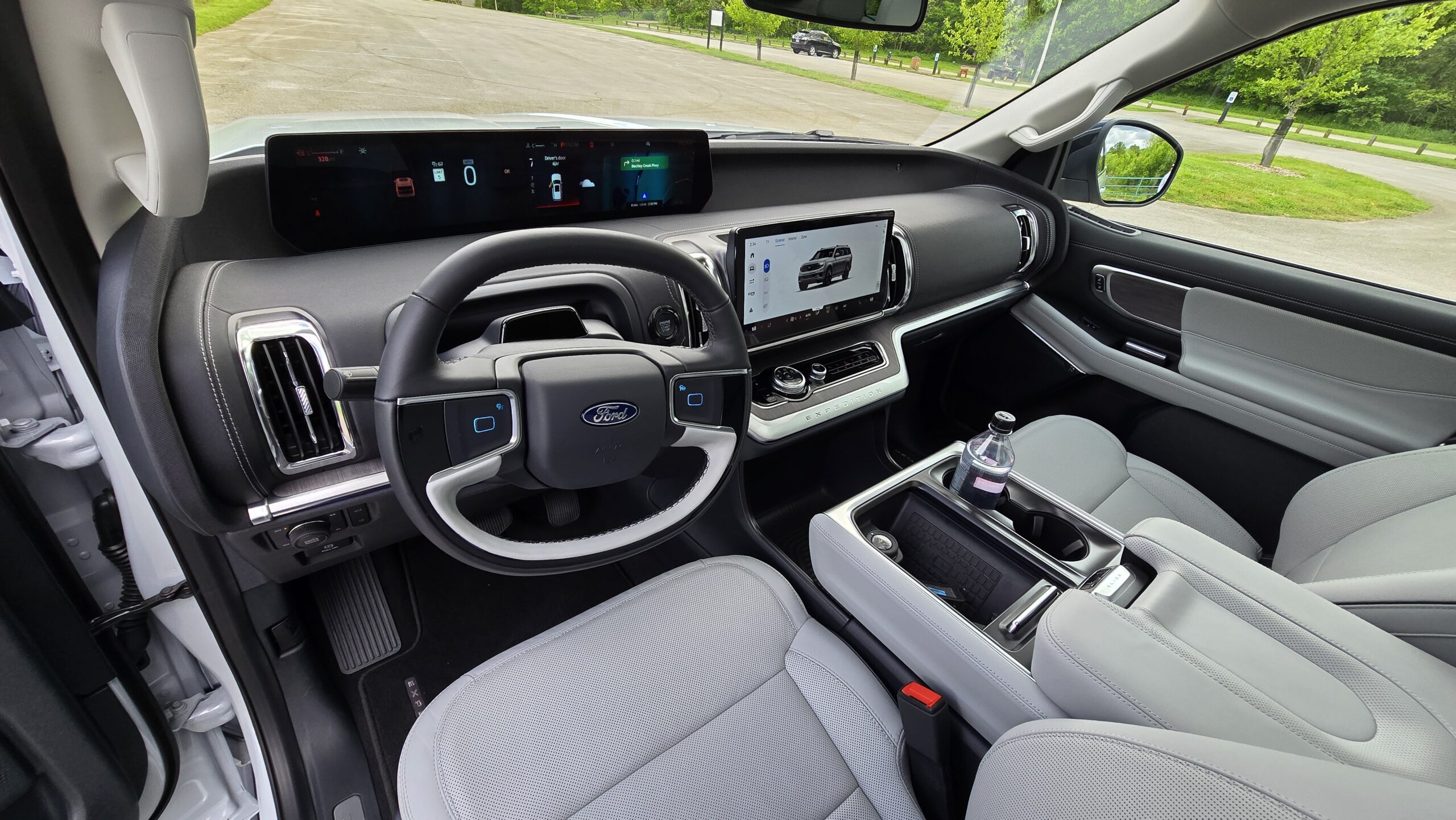
Now glancing inside the interiors of these two, they really have that initial wow factor especially with all the new technology on board. We’ll be diving into that soon, but for now let’s talk seats.
Both, as expected, feature real leather seating that feels similar in quality and has stitching and perforation details. Of course, the seats are also heated and ventilated, have memory functions, and are highly adjustable. The Navigator is more adjustable, though, with standard 24-way Perfect Position seats compared to the Expedition’s simpler 10-ways of adjustment.
The other nice thing both have is power massaging for relaxation after a long day at work.
Now getting inside and breaking down the bigger point of overall material quality, these two both impress. They have liberally applied leather, real wood and aluminum over many of the surfaces, however, we’d give the slight edge to Navigator. It just builds off the Expedition and adds a few nicer details like a glass volume control and leather assist grabs, so we’ll give it a half point advantage.
Now let’s start to look around and assess individual items, starting with our gauge clusters. Obviously, you can see the family resemblance here since both have adopted large screens, pushed all the way back. As far as sizing is concerned, the Navigator comes in exactly double the size; 48 inches, going pillar-to-pillar, compared to a measly 24 inches in the Expedition. Do you necessarily need that, no. But it certainly allows you to see more information like weather and music.
Both models display Google Maps and blind spot camera views. One con of the screen positioning, though, is that neither have a head up display.
The steering wheels have moved to 2-spoke designs for 2025, to not block the screens, and they are heated, power-adjusting, and leather wrapped, with rain sensing wipers. They also both give you power adjusting pedals, too.
Storage and Technology
Next up is the major point category of interior storage, where, they have more different than you’d think. Here at Car Confections, we measure console volume with donuts and here the Expedition swallows up the maximum 2 dozen compared to 17 in the Navigator.
And while they both have wireless phone charging pads, the even bigger difference is that the Navigator goes for a floating console design and the Expedition a full sliding console. That allows you to have more customizability and space for things like diaper bags or handbags compared to the fixed setup in the Lincoln.
Both went for an electronic shifter design, the Ford a rotary and the Lincoln a push button setup. When you shift into reverse, they of course have 360-degree cameras and parking sensors.
But before we get into other tech, it’s time to talk audio. It goes without saying that these high-end audio systems both sound awesome, but especially so in the Lincoln. It has 6 more speakers and truly makes listening to music a wonderful auditory experience.
Navigator: 28-speaker Revel Ultima 3D Audio
Expedition: 22-speaker B&O Unleashed
Another important aspect are the climate controls. Both feature 3-zone automatic setups which are relatively easy to use while driving, despite being adjusted in the screens. The main differences worth pointing out are that the Lincoln includes a fragrance system standard on all models, but does require air vent adjustment in the screen. That’s an extra complication while driving.
Alright, so now it’s time to talk about the main screen you can interact with. We already discussed the way back screens at 24 and 48 inches respectively, but here we have a 13.2- and 11.1-inch touchscreen, which allow you to pull up things like wireless Android Auto and CarPlay. They also both have Google built in, but it’s strangely the Lincoln that has a roughly 20% smaller size.
Finally, for the front of the cabins, we have auto-dimming mirrors with a frameless design on the Navigator. Neither have camera mirror ability but do include panoramic moonroofs.
LOOKING TO BUY One OF THEse VEHICLES?
A smart next step would be to check our Car Quote Tool. This tool will connect you with local dealerships in your area to get you the BEST price, access to INVOICE PRICING information, and a monthly payment calculator. Get dealerships to compete for your business!
Rear Seats and Cargo
Now let’s head for the important back areas, starting with the space. As expected for vehicles riding on the exact same underpinnings, they have nearly identical rear seat specs.
Navigator: 42.0-inches of legroom | 37.9-inches of headroom
Expedition: 42.2-inches of legroom | 37.9-inches of headroom (w/ sunroof)
But space aside, what features do you have? Well in this case, it’s the Lincoln that takes the lead with second row seats that are power adjusting instead of manual, ventilated instead of just heated, and they even have lumbar and massage.
While some may prefer the accessibility of the gap between the seats, the Lincoln also has a center console with storage and a screen to adjust all kinds of settings.
It also goes without saying that both include lots of plugs and outlets to keep devices charged up for the whole family, but neither has sunshades.
Alright, now let’s move to the next row. Getting into the third row is supremely easy in both and would not require child seat removal.
Once back in the third rows, you’ll quickly find these are some of the very best third row seats in the entire industry. They are incredibly good with over 40 inches of maximum legroom, amazing thigh support, and features like the ability to power recline.
Navigator: Legroom: 43.5-inches | Headroom: 37.4-inches
Expedition: 43.5 inches of legroom | 37.4 inches of headroom
Both SUV’s seat 3 across back here, have USBs and vents as well, but neither have a heated third row as equipped. One is available on the Navigator Black Label only.
But perhaps just as important as the back seats are the cargo areas. Both have hands-free power tailgates, and some cool new features for these all-new models.
The coolest is the split tailgate design, which allows for ultimate tailgating with its built-in table, backrest or storage shelf.
In addition to that, both models have a ton of cargo space, as you can see, and in all but one seating configuration, it is over the 5% difference required to score a point.
Of course, also keep in mind that extended wheelbase versions will increase those numbers for those with even larger space needs.
Navigator: 3rd row: 21.6 cubic feet | 2nd row: 60.8 cubic feet | Max: 107.0 cubic feet
Expedition: 3rd row: 22.9 cubic feet | Behind 2nd row: 69.9 cubic feet |Max: 108.5 cu. ft.
Other features include power-folding third row seats, which now fold 40/20/40 split, and full-size spare tires.
One other important note is that the 2nd row cannot fold flat with the executive seats in the Navigato, which is definitely something to keep in mind when selecting your seating configurations.
But the fight is not over yet, so let’s take this to the streets.
Powertrains
As we head out on the streets, you’ll find once again quite a bit of sibling relations. While both the Navigator and Expedition come standard with a 3.5L Twin-Turbo V-6, they have different power outputs… for most trims at least. Navigator goes straight to the top and includes the high output version making 440hp and 510 lb. ft. of torque on all models. Expedition normally starts at 400 horsepower, but the same high output version with 440hp is included when you buy the higher end versions of Expedition as well. Because of that, acceleration and performance are identical.
Navigator: 3.5L Twin Turbo V6: 440 hp | 510 lb.ft
Expedition (Plat Ult): 3.5L Twin Turbo V6: 440 hp | 510 lb.ft
As far as the transmissions are concerned, they both share a 10-speed automatic and 4WD systems as equipped. They are smooth and responsive so nothing to complain about here.
Test Drive and Fuel Economy
While these may occasionally need to tackle a light dirt road, these are luxury SUVs designed for the road first and foremost. Here, they both ride very nicely thanks to standard adaptive dampers. That smooths out all but the large road imperfections, but keep in mind the Expedition is riding on 24-inch wheels which means as equipped the Navigator does have superior ride quality with its 22s.
It’s also important that luxury SUVs are very quiet, which is why here at Car Confections, we take a sound-level reading of every vehicle we test out. You may be surprised to find out that the Expedition is about 4 dB quieter than Navigator when officially tested in Kentucky. Keep in mind that decibel readings are on a logarithmic scale and the smallest difference an adult can usually discern is 1 dB, which means this is definitely audible.
Navigator: 56.5 dB @ 55 MPH (official KY reading)
Expedition: 52.8 dB @ 55 MPH (Kentucky press reading)
Finally, when it comes to fuel economy, you might also be surprised that even despite them having the same city and highway fuel economies, the combined rating is 1 MPG lower on Navigator.
Navigator 4×4: 15/22/17 MPG
Expedition 4×4: 15/22/18 MPG
Reliability, Resale, and Value
In our reviews and comparisons, we are also adding in reliability and resale information to give you a better picture of the overall value beyond just the original MSRP.
Beginning with reliability, we developed the Combined Reliability Index, which takes into account several studies from trustworthy sources, and combines them in a way that gives a more realistic picture. Ford ranks 5 slots ABOVE the industry average for all brands in reliability, while Lincoln is below industry average reliability, 4 slots BELOW average to be exact. These are overall brand values since they are all-new models, which is why are different despite being built in the same KY factory.
We also put Mason’s economics degree to work to develop a detailed Predicted Resale Value tool. After 5 years and 60,000 miles, both brands get very similar results and will hurt the pocket books for sure. Ford retains a predicted 48.80% of its value and Lincoln comes in at 38.1% after 5 years.
Obviously, there was also a price gap between them at the original purchase, about $18,610 in favor of the Expedition.
I want to emphasize that if money, reliability or resale value matter less to you personally, feel free to disregard these points. And if you’d like to check out all our data about reliability and resale values, as well as learn about our methodology, make sure to head to www.carconfections.com/resale and www.carconfections.com/reliability. Buying a car is a big decision, and this is a great place to compare all the makes you might be cross-shopping.
2025 Lincoln Navigator vs. 2025 Ford Expedition Winner!
Wow so these two SUVs really brought all they could offer to the table! These two fought hard and which one you choose really is going to come down a lot to personal preference. Now let’s discuss who should be “your” personal winner based on those preferences…
Expedition:
- Value ($18,000 less expensive)
- Storage (sliding center console, larger console)
- Better resale/reliability
Navigator:
- Rear seat features (power, ventilated, massaging)
- Extra feature touches (audio system, fragrance system)
- More luxurious cabin
Now we want to know your opinions, so make sure to head to the comment section and let us know which one you would pick!
Thanks for joining us for another Car Confections Comparison! We’ll catch you next time as we sample the latest automotive delicacies!









Recent Comments