
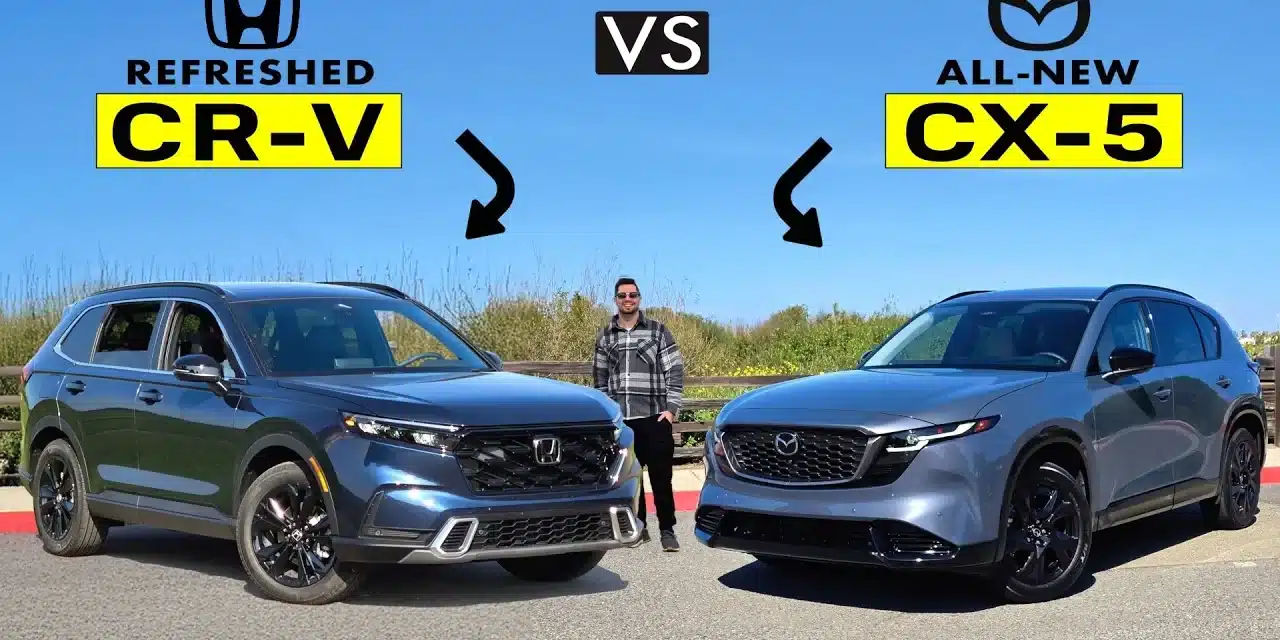
It’s hard to stand out in the compact crossover class, where there are over a dozen competitive offerings to pick from. One of the long-time favorites is, of course, the Honda CR-V, which has just been refreshed. But another Japanese rival is stepping up to the plate to mount a challenge: this is the completely redesigned Mazda CX-5… and let me tell ya, this model has changed a lot. So, which is best for you in a comparison between the 2026 Mazda CX-5 vs. 2026 Honda CR-V? Well, let’s go ahead and find out!




Exterior Design
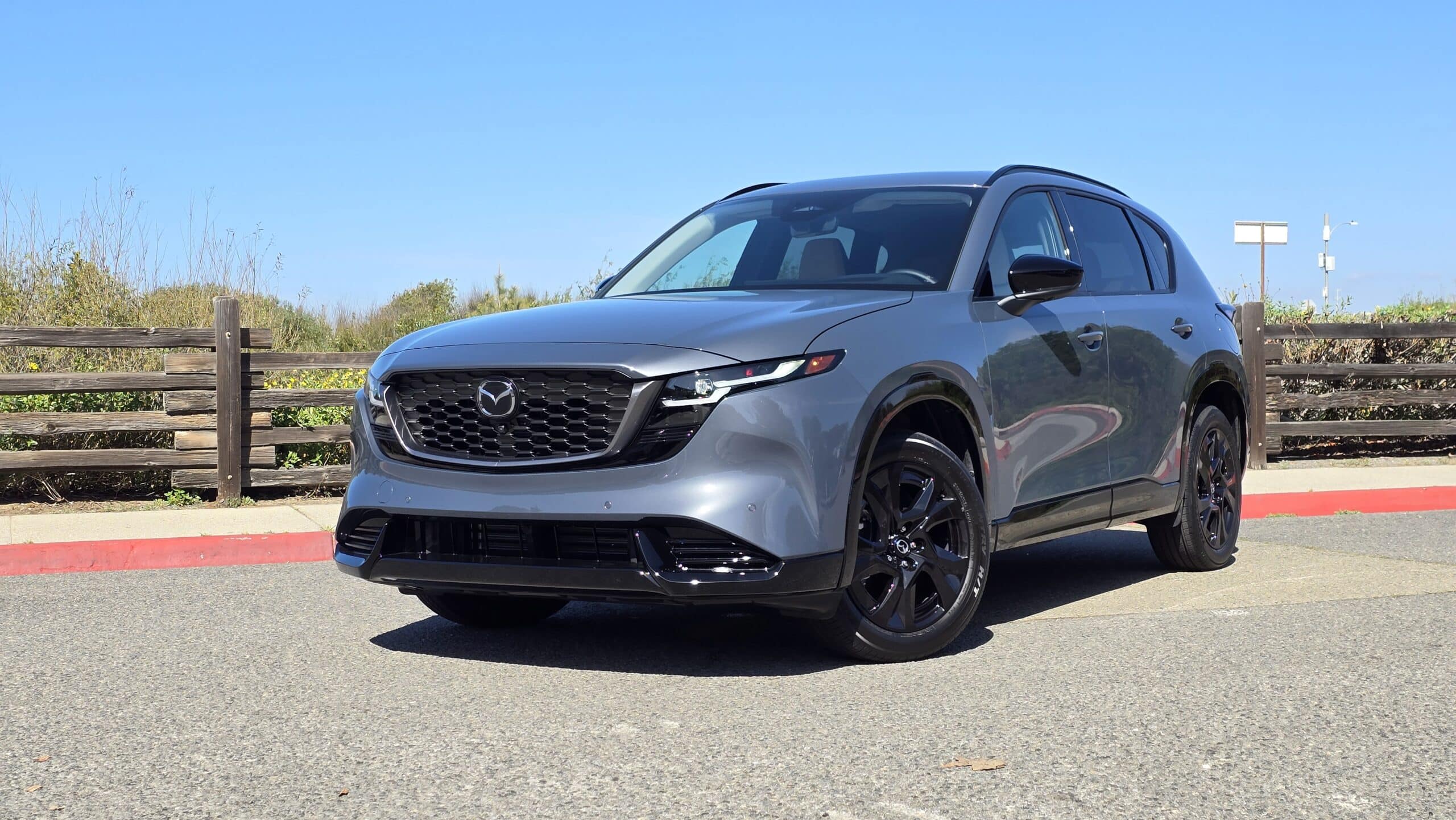
Let’s kick off this comparison with the exterior designs, where the CR-V sees some slight tweaks for 2026, and the CX-5 gets some much bigger changes. While its Mazda heritage is still recognizable, the CX-5 takes on a more mature look for its new generation, with sharper lines borrowed from its bigger siblings, like CX-90. In typical Mazda fashion, the CX-5 comes across as quite sporty, with lots of gloss black elements throughout. The same can be said for the Honda, which also uses lots of gloss black elements for its fascia.
Now let’s address the features, starting with the headlights. Both models have fully LED units, but the Mazda has some extra goodies to add. Its headlamps are projector LEDs instead of reflectors and they are also adaptive as well.
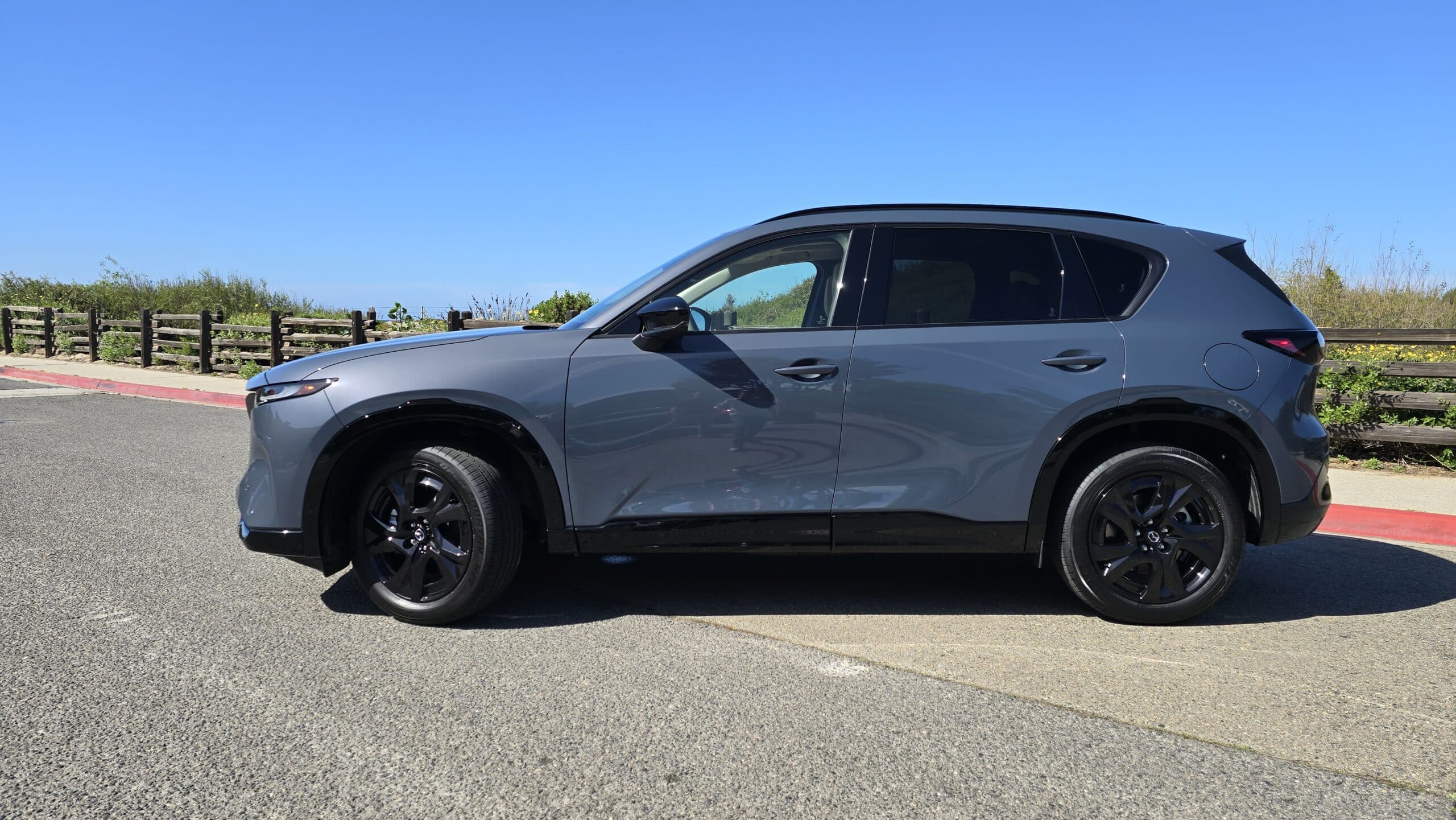
Continuing to the sides, the CX-5 has had a major growth spurt this year, adding 4.5 inches and taking it to almost the exact same length as the CR-V. However, that doesn’t necessarily mean equivalent space inside, so we will dive into all of the figures later. Punctuating the designs are gloss black 19-inch alloys on both.
Length: 184.8-inches (CR-V) | 184.6-inches (CX-5)
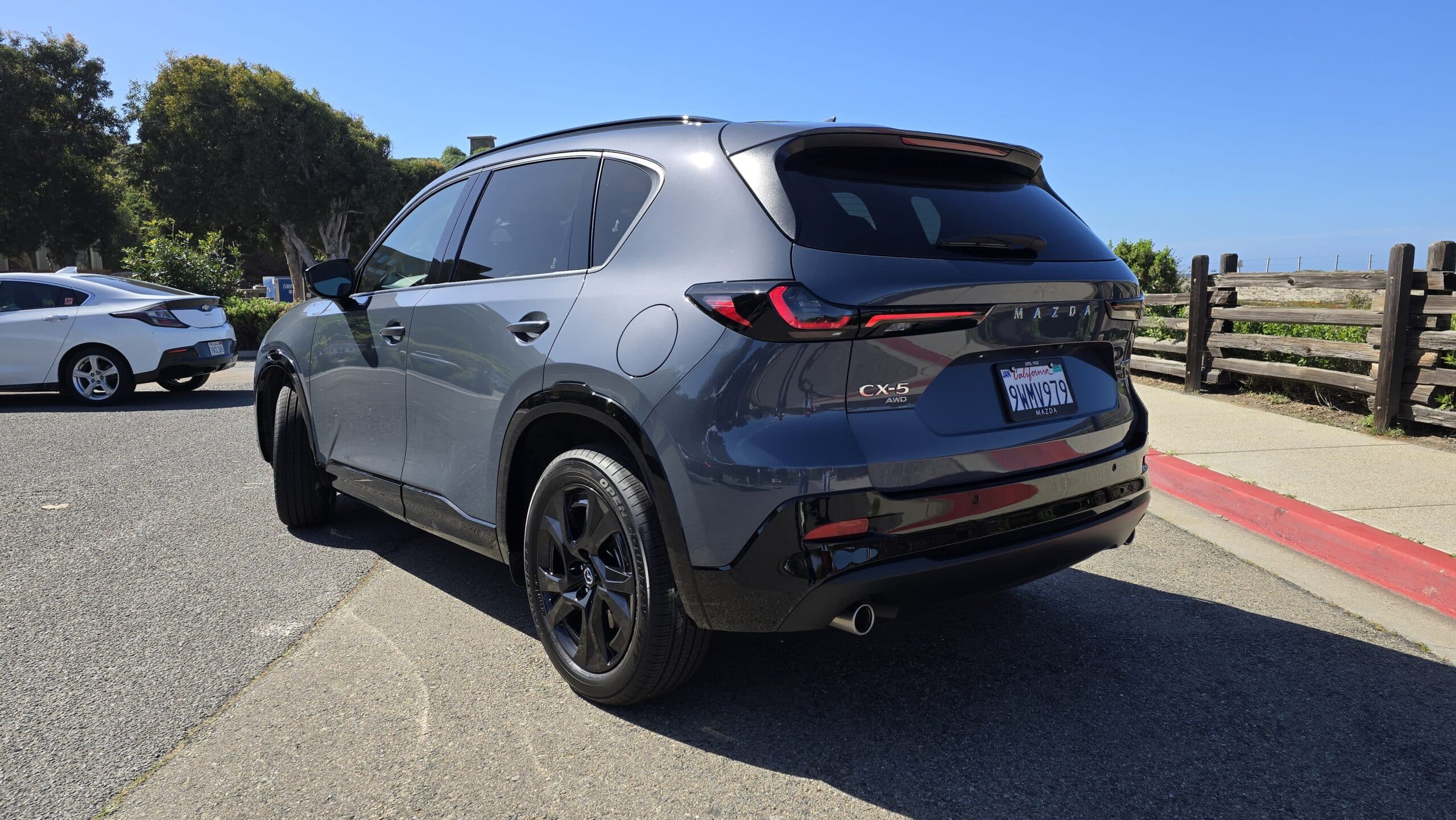
Out back, they share exposed exhaust outlets, spoilers, and rear wipers. But only the Mazda has full LED taillamps, since Honda is utilizing incandescent turn signals.
As equipped, the CX-5 has a 500 lb. towing advantage, maxing out at 1,500 lbs vs 1,000 in the CR-V.
Checking out the mirrors, each of them features heating and blind-spot monitoring, but the Mazda once again adds the luxury touch of power folding.
As far as the other important active safety features, all are included on both models, even including Traffic Jam Assist functions.
That concludes the outside, so let’s check out the updated interiors.
Interior Design
Approaching the doors, both crossovers feature smart entry systems, but only the CR-V has remote start on its key fob, free for life.
After opening the doors, you’ll find cabins that have very few similarities, especially when it comes to design. Let’s start with the seats, though, as always. One similarity these two have are those seats, which are both finished in full real leather. In addition, they also share 10-ways of power adjustment, heating, and memory. But the CX-5 also has seat ventilation, a feature Honda still not available on the Honda.
Next up, let’s get into the broad category of material quality, which we divide into solidity and material selections. When it comes to build quality, both models impress with a sturdy build without panel gaps. As far as the materials go, it’s now the CR-V that has the edge this year. The new CX-5 has swapped out soft materials on many commonly touched panels for hard-touch plastic, such as on the upper door trims and dash area around the gauges.
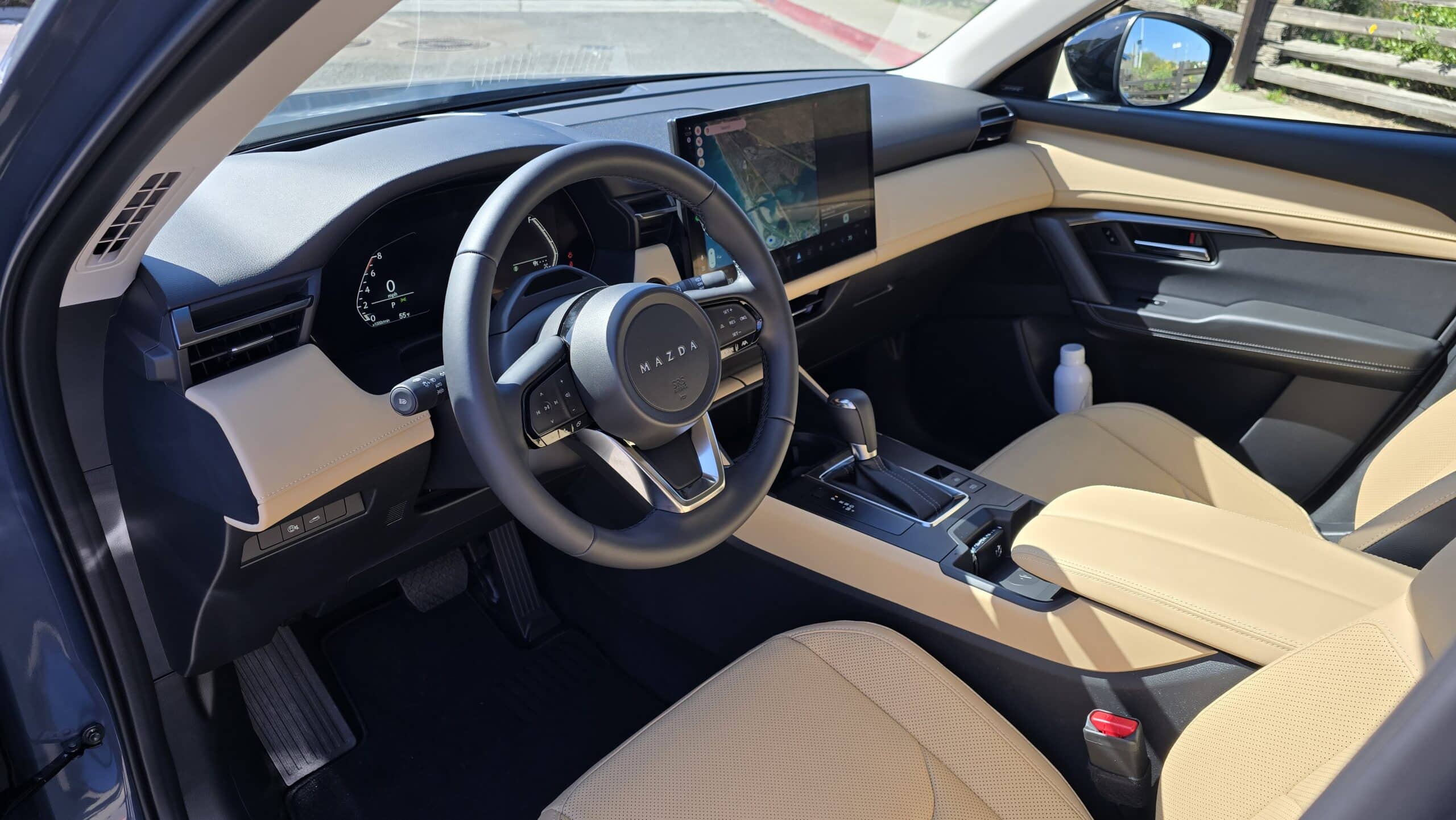
Once you fire up the two, you’ll find fully digital gauge clusters on both models this year, almost the same size. The Mazda also adds in a head-up display to keep your eyes on the road.
Moving back to the steering wheels, we have leatherette-wrapped, manual-adjusting wheels, with plenty of easy-to-use buttons. Both steering wheels are heated, and the wipers are rain-sensing.
Storage and Technology
Next up in our evaluation is storage, where we’re going to look at both the console and the multi-use cubbies in the dash. Starting with the consoles, Honda still maintains the advantage over the new CX-5 with an absolutely enormous center console. When we leave the consoles, the CR-V continues its practicality advantages, with larger cubbies and better ergonomic placement as well. While the CX-5 has improved in spaciousness and packaging this generation, it still hasn’t caught the ultra-practical CR-V.
These SUV’s forgo electronic shifters for physical ones, and in reverse, you’ll find a Honda deficiency: it does not have a 360-degree camera, meaning the CX-5 will certainly be the easier one to park.
Moving up the dashboard, we stop at the climate controls and begin to introduce the new screen on the Mazda. Both have two-zone automatic systems, but the new CX-5 loses physical control knobs in favor of digitized controls in the touch screen. This means the CR-V’s climate is easier to adjust while driving.
The same thing can also be said about the volume knobs. If you prefer a physical one, the Honda will be the better pick here, although they both have steering wheel controls regardless.
Both models are rocking 12-speaker Bose sound systems, and let’s hear a sample. As expected, the sound quality is very similar, if not identical, between them.
Both: 12-speaker Bose CenterPoint Audio
Infotainment-wise, let’s start to really dig in here, because there are some profound differences. Mazda, famously anti-touchscreen in the past, did a 180-degree turn with the new model and put the largest touchscreen of any compact SUV into the new CX-5. This 15.6-inch display, on the top trim for 2026, absolutely squashes the CR-V’s 9-inch display, which is about 54% smaller.
As far as functionality, though, they match each other with Wireless ACP & AA, and Google apps, including Google Maps, built in natively.
Wrapping up the front of the cabins, they both have auto-dimming mirrors, although the CX-5 has HomeLink garage door openers.
Additionally, you will find a panoramic moonroof on the Mazda only, since the Honda only has a standard-sized unit.
LOOKING TO BUY One OF THEse VEHICLES?
A smart next step would be to check our Car Quote Tool. This tool will connect you with local dealerships in your area to get you the BEST price, access to INVOICE PRICING information, and a monthly payment calculator. Get dealerships to compete for your business!
Rear Seats and Cargo
Now let’s head into the rear seats and the cargo areas, where we will discuss any packaging differences. As far as leg and headroom figures, they are all within a 5% margin, which is a huge step forward for the Mazda, which was previously one of the smallest in the segment.
CR-V: Legroom: 41.0-inches | Headroom: 38.2-inches
CX-5: 39.9 inches for legroom | Headroom: 39.1-in
As far as features go, the Mazda again has an advantage. While both back seats offer vents, USBs, and reclining abilities, the CX-5 goes above and beyond with heated seats too.
Now let’s pop open the hands-free power tailgates and discuss the space we have inside.
While the CX-5 again had a much-needed growth spurt for its newest generation, the space king CR-V still holds the maximum cargo advantage, with 10 cubic feet of extra space with the seats folded down. However, the space behind the second row is within a cubic foot, so keep that in mind if you often road trip with the seats upright.
CR-V: Behind 2nd row: 34.7 cubic feet | Max: 76.5 cu.ft
CX-5: Behind 2nd row: 33.6 cubic feet | 66.5 cu.ft with the seats folded
Features-wise, only the CX-5 has a spare tire and 40/20/40 split folding seats that can be easily folded with rear controls.
Alright, we’re done with the interiors now, but some of the most important things to consider take place on the test drive, so let’s take this fight to the streets!
Powertrains
These two competitors have long taken different approaches to their powertrain setups, and that trend continues for 2026, but not without some changes. On the fully loaded CR-V, it comes exclusively with Honda’s two-motor hybrid system, bumping power from the standard gas engine on the lower trims. On the other hand, the Mazda has just one engine option now, a 2.5L 4-cylinder, making 187 hp compared to the Honda’s 204 hp. Mazda plans to launch a hybrid but it won’t be available for likely another year or more, so for now, the CR-V has the power advantage and is significantly faster to 60 MPH.
CR-V Hybrid: 2.0L I-4 + 2 elec motors: 204 hp | 247 lb.ft | 0-60 MPH (Car & Driver): 7.1s
CX-5 ICE: 2.5L I-4: 187 hp | 186 lb.ft | 0-60 MPH: 9.6s (Mazda)
Transmission-wise, the Honda uses a direct drive system that acts like an eCVT, while the CX-5 keeps its old school 6-speed automatic. Both are smooth and fine for most driving situations, and the same can also be said about their AWD systems.
Test Drive and Fuel Economy
Now let’s discuss ride and handling for these two crossovers. While handling is less important for this segment, Mazda and Honda have long been segment leaders in this respect. And, for these newest models, the CX-5 has been softened in terms of handling, making it closer to the nimble CR-V than ever before. We’ll call this category even.
And, for ride quality, what the CX-5 lost in agility, it has gained in ride quality, making the CX-5 much more comfortable than ever. However, the CR-V is still one of the best riding in the segment, and it will maintain its advantage here.
Now out on the highway, sound isolation is important, which is why we take sound-level readings of every vehicle we test here at Car Confections. Scientifically speaking, most people cannot discern a difference of less than 1 dB between sounds, and as you can see, there’s more of a difference than that. But before jumping to conclusions, the CX-5’s sample was taken in California on a recent press event, which means the rating is unofficial for now until we get one back home in Kentucky.
CR-V: 55.8 dB @ 55 MPH
CX-5: 53.9 dB @ 55 MPH
Lastly, let’s get into fuel economy. As you would expect, this falls in favor of the CR-V by 11 MPG combined.
While we’re excited to test and compare Mazda’s hybrid system later when it launches.
CR-V Hybrid: 40/34/37 MPG
CX-5: 24/30/26 MPG
Resale & Reliability
In our reviews and comparisons, we are also adding in reliability and resale information to give you a better picture of the overall value beyond just the original MSRP.
Beginning with reliability, we developed the Combined Reliability Index, which takes into account several studies from trustworthy sources, and combines them in a way that gives a more realistic picture. In this respect, both rate well. Honda does quite well, rated 13 spots above industry average, and Mazda is 2 slots above average.
Related to that, they have the same warranty coverage, but Honda has one year of complimentary maintenance.
CR-V: Warranty: Basic Warranty: 3yr/36k mi | Powertrain: 5yr/60k mi | Comp Main: 1 yr
CX-5: Warranty: Basic Warranty: 3yr/36k mi | Powertrain: 5yr/60k mi | Comp Main: NA
We also put Mason’s economics degree to work to develop a detailed Predicted Resale Value tool. After 5 years and 60,000 miles, Honda has the highest value in the entire auto industry, at 64.79% expected retained value. Mazda is a bit further behind at 59.44%.
And if you’d like to check out all our data about reliability and resale values, as well as learn about our methodology, make sure to head to carconfections.com/resale and /reliability. Buying a car is a big decision, and this is a great place to compare all the makes you might be cross-shopping.
Price Assessment
Now let’s talk about pricing.
While the newest generation of CX-5 does see some price increases for its changes this year, the lack of hybrid or turbo engine options makes it a good deal more affordable than the CR-V. Its top trim MSRP is below $40k, making it one of the few options in this segment that can say so, regardless of powertrain.
CR-V (Sport Touring AWD): $42,550 | Options: +$0| Destination: $1,450 | Total: $44,000
CX-5 (Premium Plus AWD): $38,990 | Options: +$0 | Destination: $1,495 | Total: $40,485
As equipped, there will be a $3,515 price difference between these two fully-loaded models.
2026 Mazda CX-5 vs. 2026 Honda CR-V Winner!
So, there you have it: the objective winner! Do you agree? Here are a couple of things to consider when picking each one for you personally:
CR-V:
- More maximum cargo space
- Hybrid System benefits (for now)
- Physical climate and audio controls
CX-5:
- More features throughout
- Premium design
- Technology advantages
Now we want to know your opinions, so make sure to head to the comment section and let us know which one you would pick!
Thanks for joining us for another Car Confections Comparison! We’ll catch you next time as we sample the latest automotive delicacies!











Recent Comments